
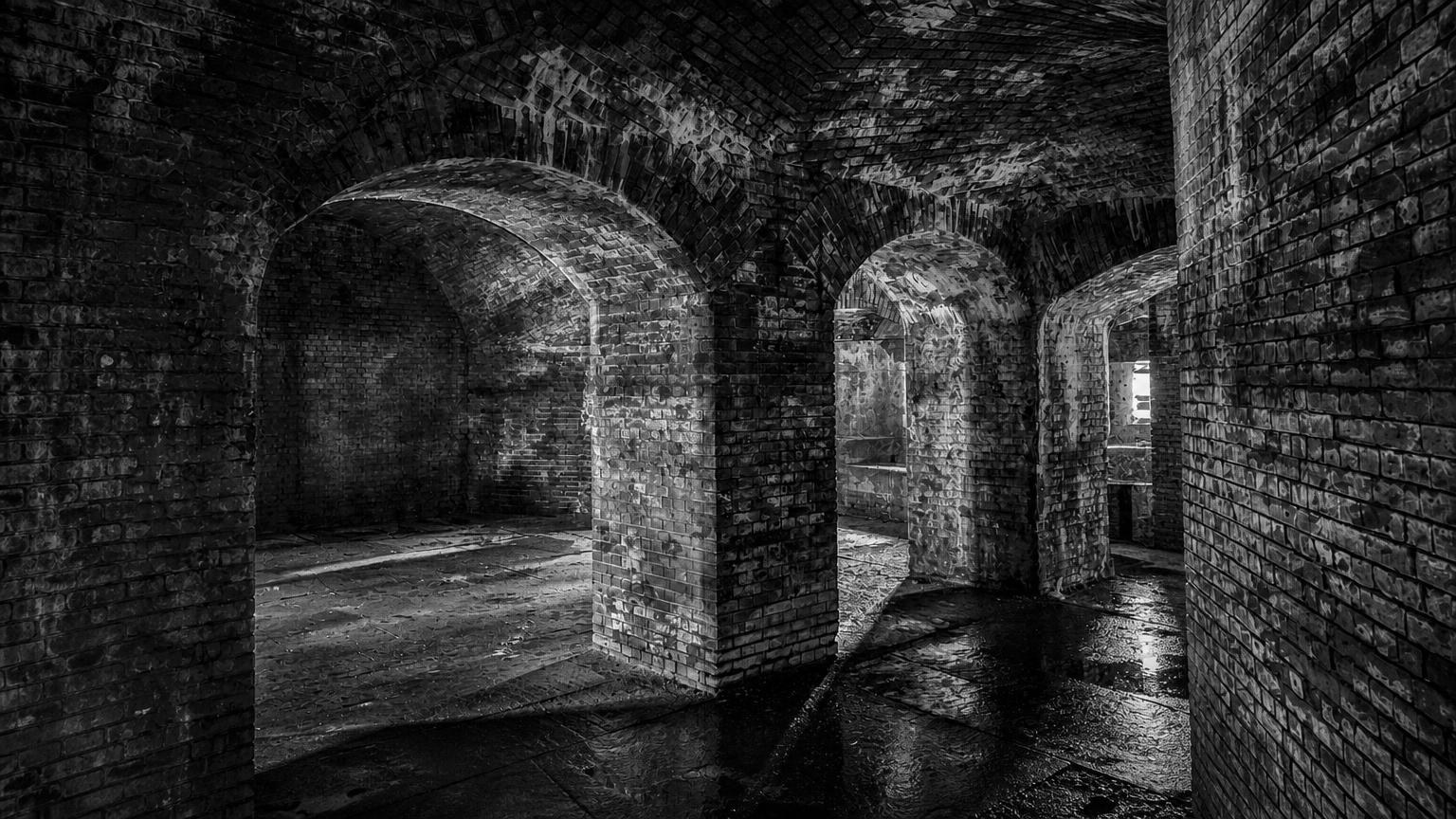
Fort Delaware stands on Pea Patch Island in the Delaware River. Built for coastal defense, it became a Civil War prison. The suffering of prisoners is documented; later stories about apparitions and voices do not establish a supernatural explanation for that history.
From Harbor Defense to a Civil War Prison
The Delaware Public Archives explains that the fort was intended to protect Wilmington and Philadelphia. Union forces held more than 33,000 Confederate and political prisoners there during the Civil War.
The state marker records approximately 2,400 Confederate prisoner deaths, with many buried at Finn's Point National Cemetery in New Jersey. The qualifier matters: a figure for Confederate prisoners should not automatically be presented as a total covering every person who died at the fort.
The Prisoners Behind the Fort's Darkest History
Accounts of confinement deserve attention on their own terms. A death count establishes the scale of loss; it does not explain an unidentified sound heard by a later visitor.
Likewise, a room called a dungeon in a ghost story needs a documented historical function before a writer attaches specific punishments or incidents to it.
The Woman in White — and the Stories Built Around Her
The earlier article described a nurse in white, a lavender scent, soldier figures and distant gunshots without naming witnesses or linking original recordings. It also assigned a purpose to the supposed nurse's continued presence.
Those are unverified haunting claims. A recurring character in folklore is not an identified historical person, even when the setting once contained a hospital.
What Fort Delaware Is Today
The state archives records the site's preservation as a state park in 1951 after advocacy by the Fort Delaware Society. Its historical interpretation provides a starting point for understanding the fort beyond its paranormal reputation.
Check the park's own information for current access and programming. Continue with Delaware stories or compare military history and reported experiences at Fort Ontario.
Which part of Fort Delaware’s transition from coastal defense to prison would you want to understand before interpreting a reported soldier figure?