
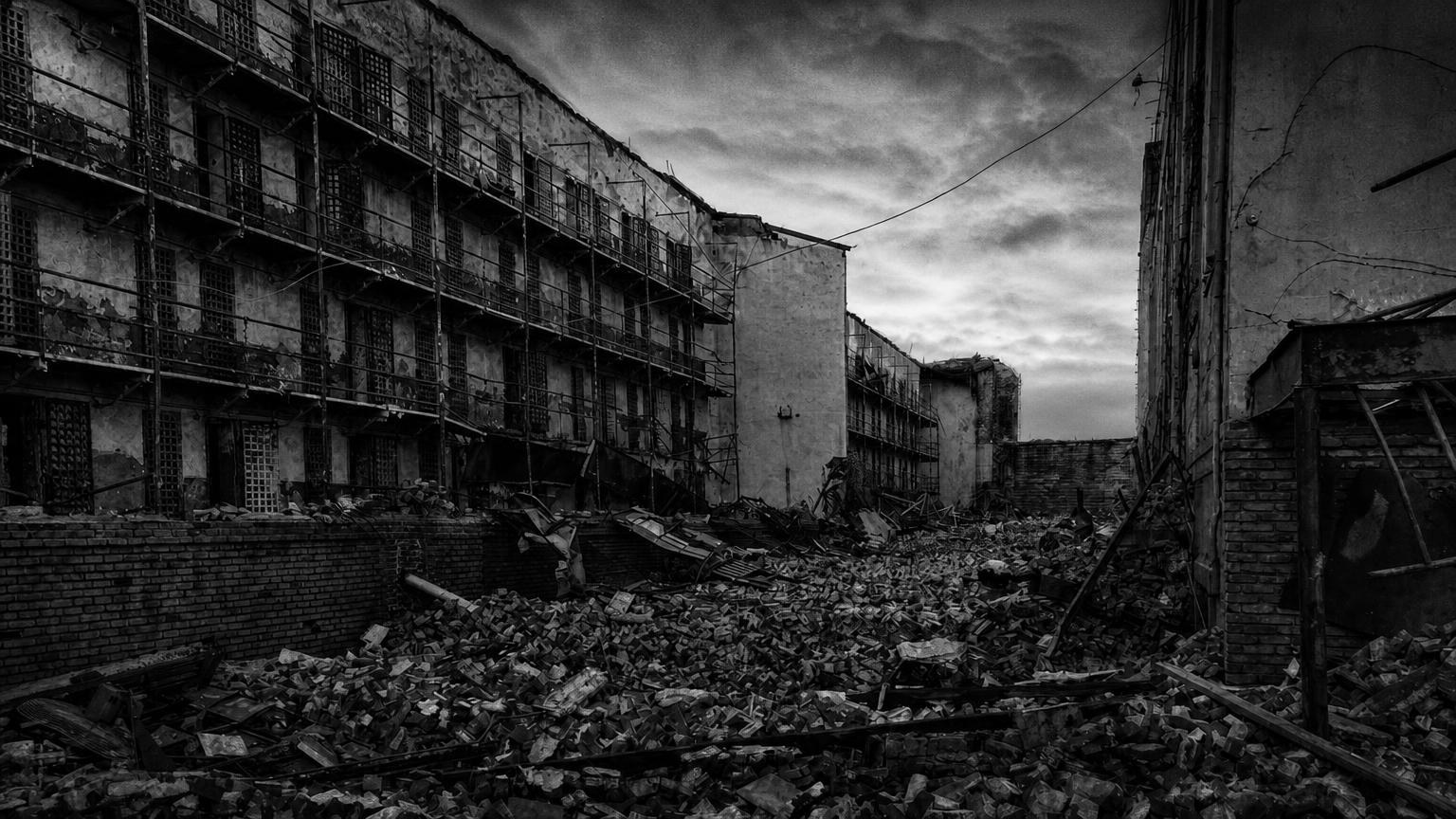
A warden still making his rounds. Cries from solitary cells. A guard whose patrol supposedly outlasted death. The ghost stories attached to Tennessee State Prison give its closed cell blocks an imagined afterlife. What survives as documented history is substantial enough without assigning those sounds and figures to the dead.
The former Nashville prison operated from 1898 to 1992. Its imposing buildings belong to a real penal history; the haunting claims require a separate trail of evidence.
The Prison Behind the Closed Gates
A Tennessee District Attorneys General Conference publication discusses the institution's opening in 1898 and closure in 1992. Those dates establish the operating life of this prison, giving the story a firmer starting point than an undated encounter in a cell block.
Closure is a historical milestone, but it does not explain a later noise or apparition. The building's appearance and former purpose can shape a reader's expectations before any particular claim is examined.
Why the Records Begin Before the Building
The Tennessee State Library and Archives finding aid identifies records spanning 1831–1992, including material from earlier facilities. That longer span should not be read as the age of the Nashville building discussed here.
Prison systems have histories that extend across institutions. Keeping the record series separate from the lifespan of one site helps prevent an episode from an earlier facility from acquiring the wrong setting in a later retelling.
The Warden in the Archive Story
The earlier account described a warden patrolling after death, slamming doors, cries from solitary cells and a spectral guard. These are the article's haunting stories, rather than documented episodes from the prison's working years.
No identified witnesses, dated statements, original audio or investigation records accompanied those claims. That absence leaves basic questions unanswered: who experienced an event, where it happened and how the description reached the archive. The recurring image of a patrol can be compelling without establishing that an employee returned after death.
A Famous Inmate Is Not a Cell Assignment
The earlier account also singled out a named inmate's cell block as unusually active. It supplied evidence for neither the cell assignment nor the alleged encounters there.
A prisoner's notoriety cannot fill those gaps. A location-specific association needs a date and facility record before it becomes part of the building's history. Even a verified assignment would establish occupancy, leaving any later paranormal identification as a separate claim.
What an Echo Cannot Identify
An echoing institutional space can make a sound difficult to locate. That is a relevant ordinary possibility, not a demonstrated explanation for every noise described in the archive. Without the original circumstances, neither a supernatural cause nor a particular alternative can be settled here.
Admission, administrative and institutional records can test claims about operations and occupancy. An alleged encounter needs its own documentation, including recording conditions and possible ordinary causes. Historical paperwork cannot identify the speaker in an unverified voice recording or give an apparition a name.
The Boundary at Tennessee's Gates
A closed prison is not automatically a public ghost attraction. This history does not establish current access; information and permission must come from the responsible authorities.
For another prison whose actual function belongs at the center of its story, read about Kentucky State Penitentiary. At Tennessee State Prison, the recorded institution and the imagined continuing patrol remain distinct: one has dates and archives, while the other still lacks an attributable encounter.
What might prison records tell us about the daily patrols at Tennessee State Prison without identifying the figure in its later ghost stories?