
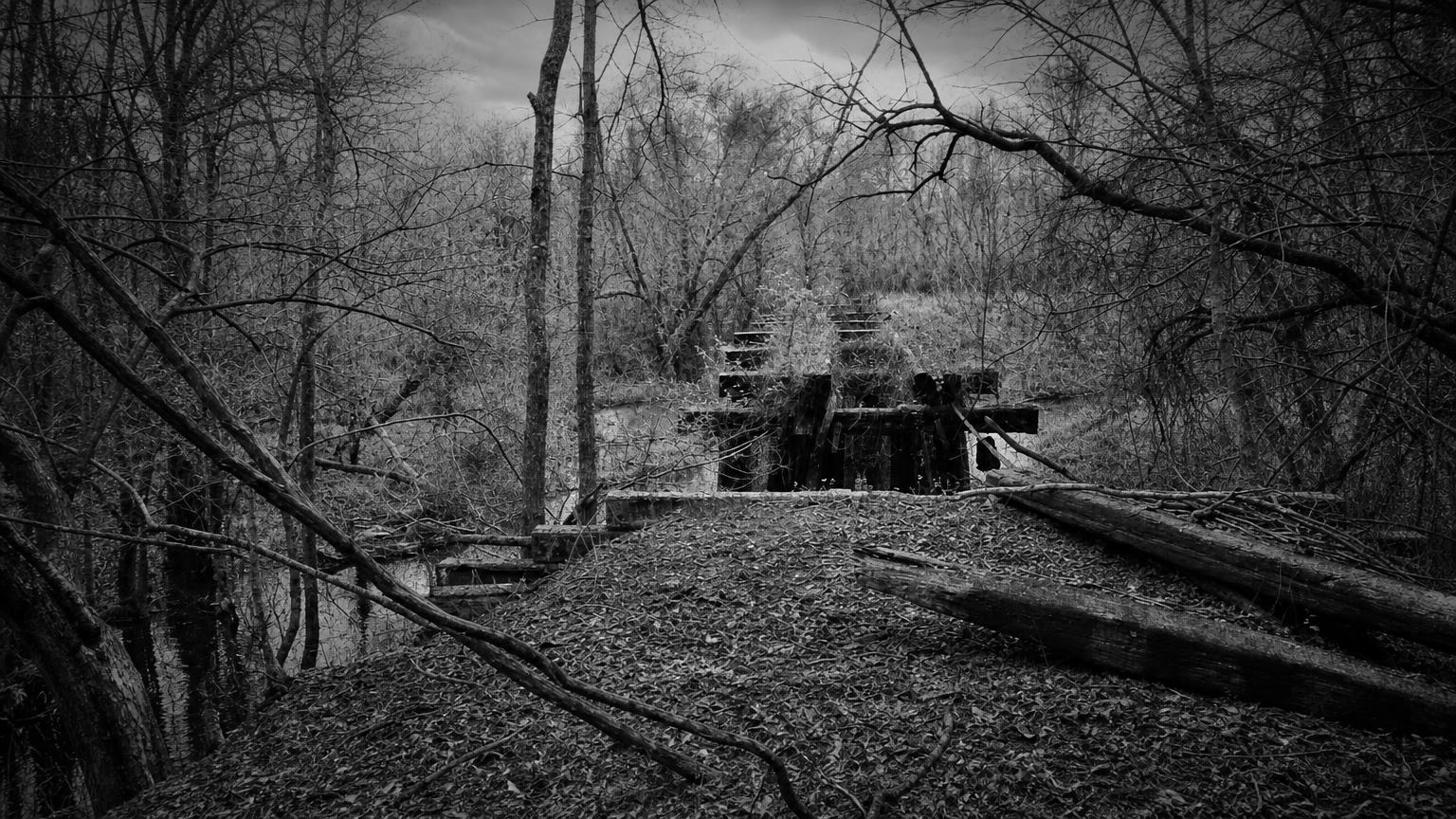
The tracks are gone, but the light remains the center of the story. Near Crossett in Ashley County, Arkansas, accounts of a mysterious glow have kept an old railroad corridor alive in folklore. What people reportedly saw—and what later storytellers built around it—are different questions.
The Crossett Light concerns a reported light phenomenon. The cited sources does not establish a phantom locomotive or the fatal passenger-train disaster described in an earlier account.
A Glow Along a Vanished Railway
The Encyclopedia of Arkansas traces accounts of the light to the early twentieth century and notes that the railroad tracks are no longer present. That gives the folklore a historical setting without turning every element of the legend into railway history.
Reported descriptions vary in color, height and movement. Those differences matter: a collection of light sightings need not describe one identical experience. Preserving the variation is more useful than reshaping every report into a single, perfectly consistent apparition.
The Worker and the Lantern
The regional account records a legend about a railroad worker killed in an accident and a lantern associated with his search. It supplies a human figure for an otherwise uncertain light, connecting the glow to the corridor's railroad identity.
That explanation belongs to folklore. The account does not authenticate a spirit or establish that a particular observation was the worker's lantern. A traditional narrative can explain how a place is remembered while leaving the physical cause of an observation unresolved.
The Train Disaster the Source Does Not Establish
An earlier account described a fatal derailment in the 1940s, numerous passengers and a ghost train returning on an anniversary. The regional reference cited here does not establish those details.
Such a disaster would need an identifiable accident record or contemporary reporting before it could be presented as history. A mysterious light near a former railway cannot supply those missing records. Nor does the lantern legend establish a locomotive, passengers or a recurring anniversary appearance. Each addition changes the story and carries its own burden of support.
Seeing a Light, Naming Its Cause
The encyclopedia discusses possible ordinary explanations, including vehicle lights and swamp gas. It does not establish one explanation for every reported sighting. These possibilities deserve consideration without being treated as completed investigations of events whose conditions are unknown.
There are two questions here: what someone observed, and what produced it. An uncertain cause leaves the second question open; it does not confirm the lantern legend. Likewise, naming a plausible source of light does not demonstrate that it accounts for a particular report.
Details That Could Bring a Sighting Into Focus
Useful documentation would retain the time, viewing direction, weather and nearby light sources, alongside an original recording. Those details could help compare observations and assess proposed explanations under the circumstances in which a light appeared.
A retelling that adds a passenger list or an anniversary cannot do that work. The most valuable account would preserve what the observer actually described, including uncertainty, rather than supply a more dramatic event behind it.
What Crossett Keeps After the Tracks
Crossett's light belongs to Arkansas folklore and the cultural memory of a railroad landscape. Its interest survives the removal of unsupported disaster details: the enduring question concerns a reported glow and the meanings attached to it.
Browse Arkansas stories or compare Boy Scout Lane, another location whose legend has acquired unsupported details. At Crossett, following the story carefully means keeping the vanished railway in view without conjuring a train the reviewed source never establishes.
What do you think Crossett’s vanished railway adds to the meaning people give the reported light?