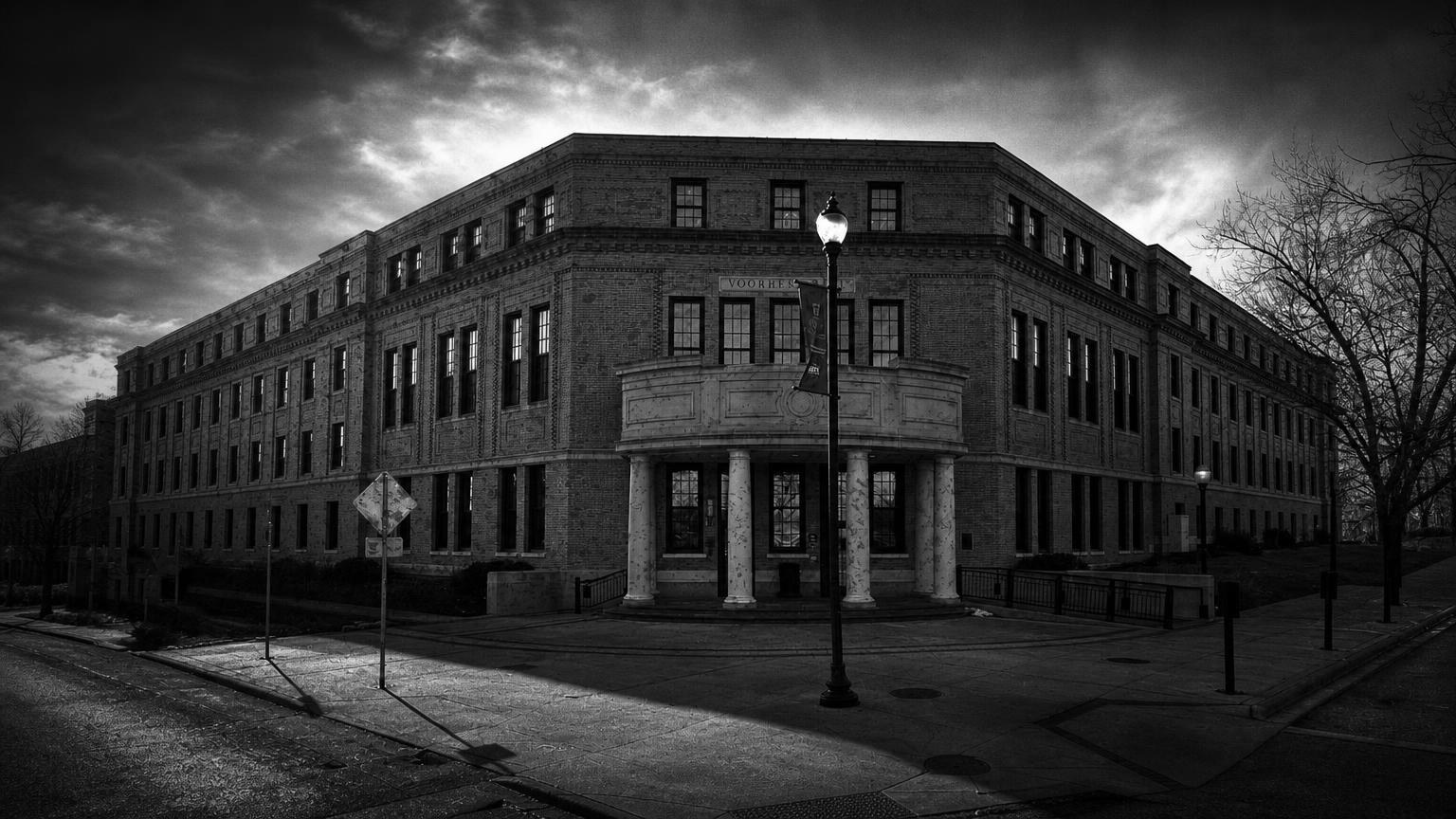
A grandfather clock gives Coe College's Voorhees Hall ghost story its most intimate connection to the past. It was a memorial to Helen Esther Roberts, a student whose life ended during the 1918 influenza epidemic. The stories that gathered near the clock came later; the loss it commemorates is documented.
Helen Roberts Before the Ghost Story
Coe College's 2018 retrospective, with research credited to historian Bethany Keenan, identifies Helen as an eighteen-year-old first-year student from Strawberry Point. The college announced her death from influenza-related pneumonia on October 19, 1918.
That wording preserves an important detail: October 19 is the date of the announcement given in the account. There is no need to make the record more precise than the source allows. Her name, age and place in the college community already give this story a human scale that a generic apparition cannot.
A Clock and a Scholarship in Her Memory
Helen's parents donated a grandfather clock and endowed a scholarship in her memory. Both commemorations connect the college's story to a particular student and to the family's response to her death.
The clock also features in the later campus legends. Its place in those stories is evocative because its memorial purpose is real. But those are two distinct strands: the donation belongs to the historical account, while a supernatural presence near it belongs to folklore. One does not establish the other.
The Figure Beside the Clock
Coe's retrospective recounts stories of a figure or cold breeze near the clock, unexpected phone calls and disturbances in student rooms. These are the reported ingredients of the campus legend, rather than independently established events with a demonstrated supernatural cause.
The distinction does not require dismissing what someone may have experienced. It requires care about what the experience can tell us. A cold breeze, for example, does not identify a deceased person; a story about a figure cannot become Helen's biography simply because it is told beside her memorial.
The Infirmary and the Uncertain Room
Even the location of Helen's death needs careful handling. The college's account notes uncertainty about the exact place, with research pointing to the second floor used as an infirmary. Conflicting room numbers should remain unresolved where the evidence does not settle them.
A precise room number can make a haunting feel easier to picture, but narrative clarity is no substitute for historical support. The account also does not identify the hall's namesake as the ghost. Helen's story should retain her identity rather than being reassigned to someone associated with the building's name.
What Campus Folklore Keeps and Changes
The historical record and the campus anecdotes answer different questions. The first helps establish who Helen was and how she was commemorated. The second shows the forms her later ghost story has taken in the college's telling.
Interpreting those anecdotes as an expression of remembrance is different from establishing that Helen caused the reported disturbances. Both memory and mystery can remain part of the reading, provided the transition from documented loss to later legend is clear. Otherwise, the student herself risks disappearing behind the story attached to her.
A Memorial Within a Living College
Voorhees belongs to a college community. A published ghost story does not make residential rooms available for exploration, and curiosity about the legend should respect that boundary.
Read Villisca's crime history and later reports for another Iowa example of how accounts of death and subsequent haunting claims require different sources. At Voorhees, the clock offers a quieter point of return: before it became a feature of ghost lore, it was a family's memorial to Helen.
How does learning that the Voorhees clock began as a family memorial change the meaning of the stories gathered around it?