
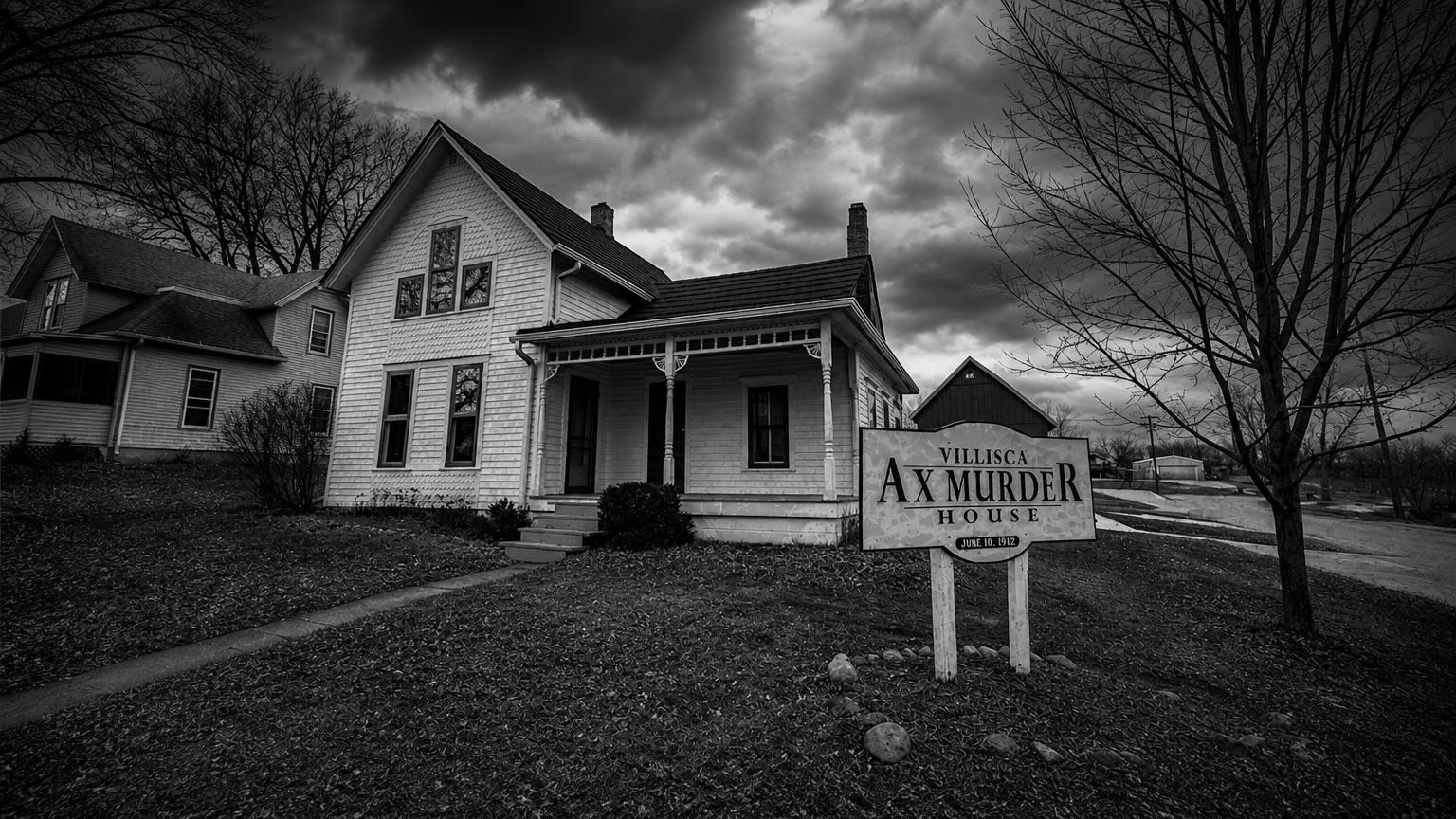
Eight people died inside the Villisca house in a single night. More than a century of questions separates that crime from the voices, footsteps and apparitions later associated with the property. The unsettling part of the story begins with something certain: the victims were real, and the killing remains unsolved.
The Night of June 9–10, 1912
The Iowa Legislature's historical account describes the deaths of Josiah and Sara Moore, their four children, and two visiting children from the Stillinger family. The killings occurred overnight on June 9–10, 1912, and were discovered the following morning.
Those names and family relationships matter. They keep the house connected to the people who died there before its later reputation takes over. The historical event is not a backdrop invented for a ghost story; it is the central loss around which subsequent stories have gathered.
An Unsolved Crime Leaves Room for Theories
The case has generated many theories, but a proposed suspect is not a convicted murderer. An account of an investigation also needs to be distinguished from a finding that settled the crime. The supplied history does not resolve that uncertainty.
Readers encounter two different mysteries here: who committed the killings, and what to make of later experiences attributed to the house. A reported voice cannot bridge that gap by itself. Nothing in the haunting material presented here identifies the murderer or establishes that a victim remains inside.
When a Crime Scene Becomes a Destination
The current attraction operator presents the property through both its crime history and its haunted reputation. That material helps explain how visitors encounter Villisca today and provides the appropriate starting point for current visit information.
Promotion and verification serve different purposes. An operator's description can document a site's public identity without independently establishing a supernatural event. Keeping that distinction visible allows the attraction's haunted reputation to be discussed without treating its presentation as an investigative finding.
Children's Laughter and Footsteps in the Lore
Stories associated with the house include children laughing, footsteps and apparitions. Their evidential status depends on where they come from. An identifiable witness's account can be presented as testimony; a story without an identifiable witness remains unverified folklore.
That distinction is especially important when a sound is connected to the children who died. Describing something as laughter does not identify its source, and a resemblance to a familiar haunting story does not establish a victim's presence. The supplied account gives no basis for making that identification.
What the Cameras and Recordings Cannot Settle
An earlier account described recordings and thermal-camera observations as compelling evidence without identifying original files, investigators or the conditions involved. Without those details, readers cannot assess what was captured or how the interpretation was reached.
A recording, an equipment reading and a person's impression are different kinds of material. Each needs its own context. Calling them unexplained may describe a limit in available information; it does not, on its own, supply a paranormal explanation.
Leaving Villisca's Questions Open
For another Iowa location where a real death became part of a ghost story, see Voorhees Hall. The comparison is about how later narratives gather around documented losses.
At Villisca, the unresolved crime deserves to remain distinct from the haunting reputation. The house carries enough weight in the eight lives lost there. Its later stories can invite curiosity without speaking for those victims or pretending to answer the question the historical record leaves open.
How can a retelling of Villisca’s reported encounters leave room for curiosity while respecting the eight victims and the unresolved crime?