
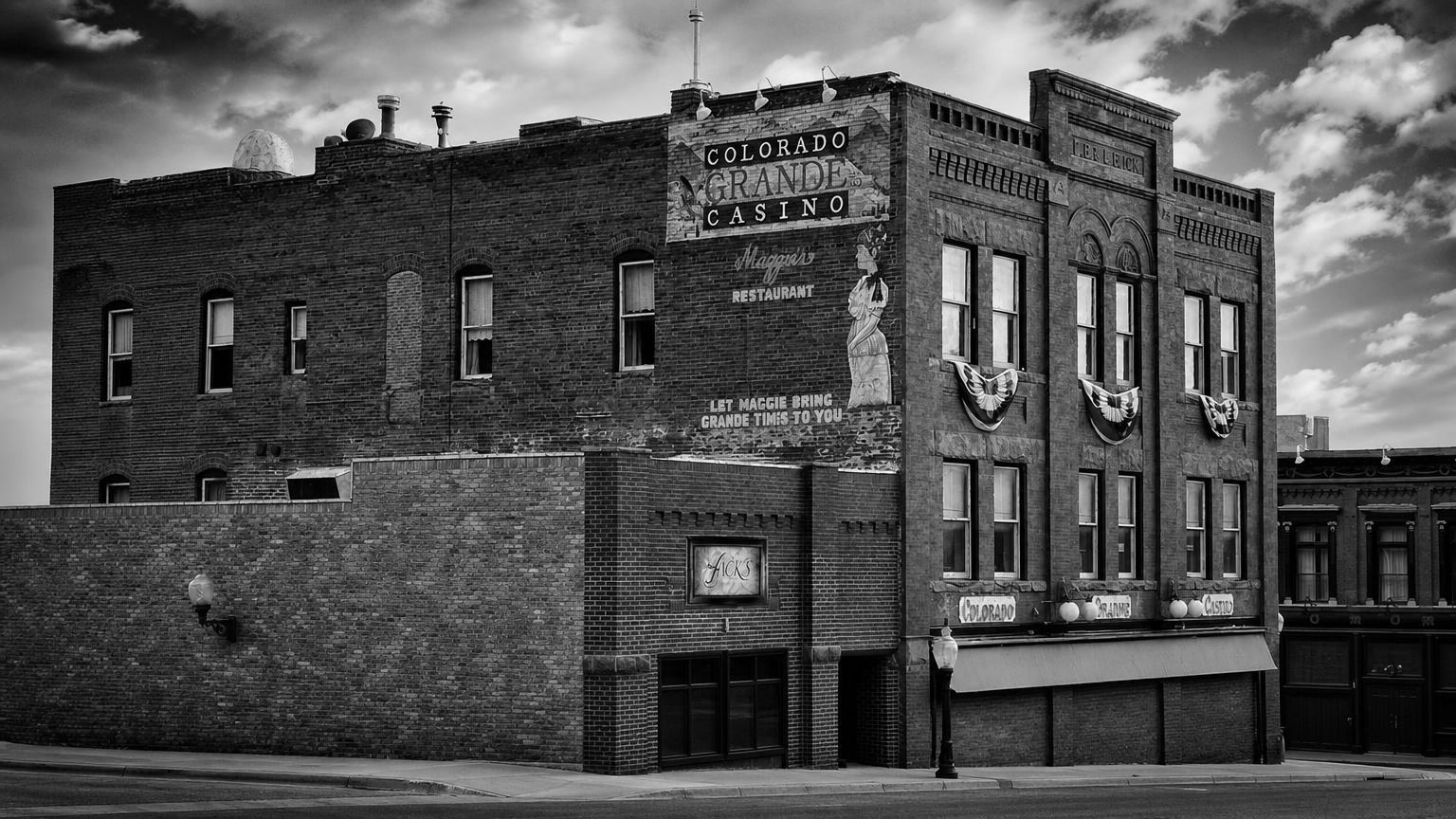
Colorado Grande Casino in Cripple Creek does something unusual for a supposedly haunted business: it openly incorporates a ghost called Maggie into its public identity. That makes the legend itself easy to document. What remains much harder to establish is whether Maggie corresponds to a particular historical woman and whether perfume, singing, cold areas or an apparition reported around the property have a supernatural cause.
The Building Predates the Casino by Nearly a Century
PlayColorado's property history identifies the Fairley Bros. & Lampman Building as an 1896 structure with earlier commercial uses and dates the Colorado Grande Casino's opening to October 11, 1991.
That split timeline matters. A nineteenth-century building can contain a late-twentieth-century casino, and stories can become attached to either era. Keeping the building history separate from the business history prevents a modern anecdote from being projected backward onto people who occupied the structure decades earlier.
Maggie Is Part of the Casino's Own Story
The casino's website describes a possibly haunted hotel and invokes Maggie in its public presentation. That makes the site a primary source for the fact that the business uses and preserves the legend. It is not independent evidence that a spirit is present.
This is an important distinction in paranormal tourism. A venue can sincerely embrace a ghost story, build events or branding around it and collect visitor experiences without the commercial use of the legend proving its supernatural explanation.
Perfume, Singing and a Figure Near the Stairs
The earlier account described unexplained perfume, singing, cold areas and an apparition near a stairway. It did not supply a dated witness account or an archival record capable of identifying the figure as Maggie.
A scent can be vivid without identifying a person. A song heard from another room can be memorable without establishing an invisible singer. A figure seen briefly on stairs can be unexplained without carrying a verified biography. Those observations become stronger when reported exactly as experienced rather than completed with details added later.
A Ghost Name Can Become More Certain With Every Retelling
Once a property has a named ghost, new experiences tend to be interpreted through that name. A visitor smells perfume and wonders whether it was Maggie. Someone hears music and the story gains another detail. Over time, the name can seem historical even if the original biographical evidence was never established.
That does not mean the reports are fabricated. It means the identity claim should be examined separately. A historical Maggie would require records showing who she was, how she was connected to the building and why a particular experience is being attributed to her.
A Working Casino Is a Complicated Investigation Site
A hotel and casino contain guests, staff, audio systems, lighting, mechanical equipment and constant movement. All of those factors matter when investigating sounds, lights or temperature changes. A useful account would record the exact location, time and surrounding activity before deciding an anomaly had no ordinary source.
The reviewed material does not provide controlled observations capable of isolating a paranormal cause. That leaves the experiences in the category of reported phenomena rather than verified evidence.
The Legend Is Real Even When the Cause Is Unsettled
There is no question that Maggie is part of the Colorado Grande's public story. That alone is culturally interesting: a historic Cripple Creek building and a modern casino have developed a paranormal identity that visitors now encounter alongside the property itself.
What remains unresolved is the leap from legend to historical person and from unusual experience to supernatural explanation. Keeping that uncertainty visible lets the story stay fun and intriguing without presenting folklore as a settled finding.
Use the operator's current information for access and accommodation. This article concerns history and folklore, not gambling advice or a promise of an encounter. For another Colorado hotel with a distinct relationship to supernatural storytelling, read the Stanley Hotel article.
How does meeting Maggie first as part of the Colorado Grande’s public identity shape the way you would assess a later report about her?