The former Bates Motel in Coeur d’Alene, Idaho, carried a name that practically invited horror-movie comparisons. Guests and local storytellers also attached ghost stories to Rooms 1 and 3. But the real motel was never Norman Bates's fictional property, and later reporting says the remodeled business became The Flats. The fun is in sorting the theatrical association from the history and the unexplained reports from the details added later.
A Real Motel With an Accidentally Perfect Name
A Coeur d’Alene Press retrospective dates the original Kenniston Motel to 1950 and says the Bates name arrived after Randy Bates purchased the business in 1987. The property leaned into the coincidence with souvenirs and jokes connected to Alfred Hitchcock's Psycho.
That marketing history helps explain why the motel became memorable. A roadside lodging business called Bates Motel does not need a supernatural event to attract attention from people who already know the fictional Norman Bates. Expectations can become part of a place's reputation before anyone reports a ghost.
Room 3 Is Where the Legend Gets Specific
Ghost stories around the property often focus on Rooms 1 and 3. Idaho history writer Rick Just discusses that reputation while questioning repeated claims that author Robert Bloch stayed at the motel.
The distinction matters because the motel's name is sometimes treated as though it proves a direct connection to Psycho. A reliable record would be needed to establish that Bloch visited the property or drew inspiration from it. A familiar name and a spooky reputation are not evidence of literary influence.
Flickering Lights, Moving Objects and Guest Stories
The Coeur d’Alene Press retrospective recalls guests reporting flickering lights and objects that seemed to move. Those reports are part of the motel's modern folklore, but reporting that someone experienced something unusual does not establish the cause.
A useful account would identify the room, date, witness and circumstances, including whether electrical or maintenance problems were present. That kind of detail makes it possible to separate a memorable stay from a repeatable unexplained event.
The Tragic Backstory Is the Part We Cannot Verify
An earlier account included a detailed story about a young female employee's death and an apparition during a storm. No witness name or supporting historical record was supplied for that account, so it should not be treated as established history.
This is a common problem with haunted-property stories. Once a location has a ghost reputation, a dramatic biography can appear later and begin functioning as the explanation for every unusual event. Unless the person and event can be traced through reliable sources, the biography belongs to the legend rather than the factual record.
The Bates Name Is Not a Film Location
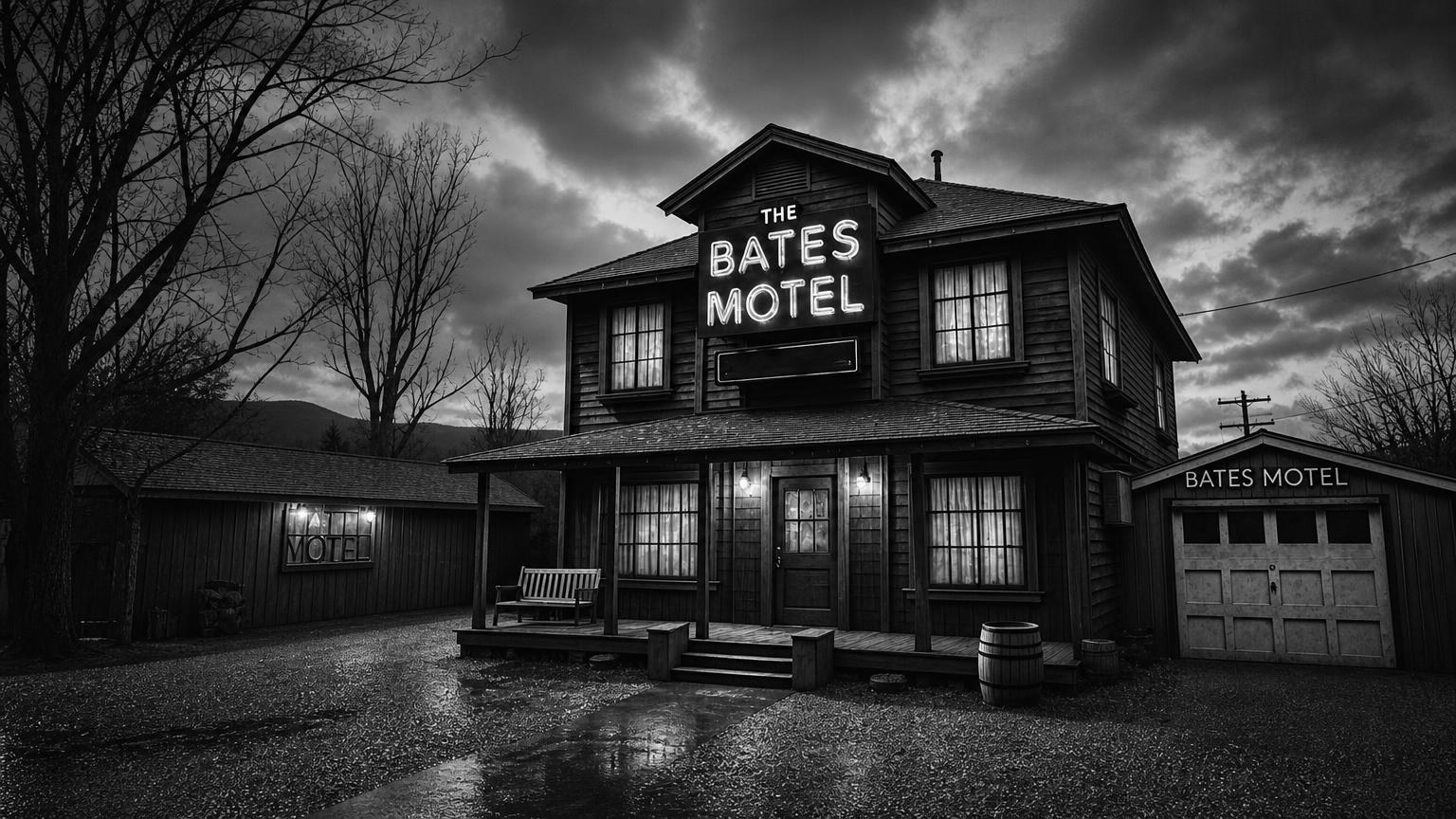
A photograph of a dramatic house with a Bates sign can be visually convincing while depicting an entirely different property. Historic imagery needs location verification, especially when a real business shares a name with one of the most recognizable fictional motels in popular culture.
The Idaho motel's story is interesting precisely because it is its own story: a real lodging business, a name that invited Psycho jokes, and ghost reports that developed around specific rooms. It does not need to be turned into the movie set to work.
What Happened to Room 3?
The Coeur d’Alene Press reports a further change to The Flats in January 2024. Older haunted-motel lists therefore should not be treated as current booking guides or evidence that the property operates exactly as it did when the ghost stories were first circulated.
Anyone interested in the present-day property should consult the current operator for accommodation details. The archive can preserve the Bates Motel era without pretending the business, rooms or visitor experience are frozen in time.
For another property where business history and ghost-tourism lore have changed over time, read about Mystery Manor.
How might the change from Bates Motel to The Flats affect what a Room 3 story can tell a present-day reader?