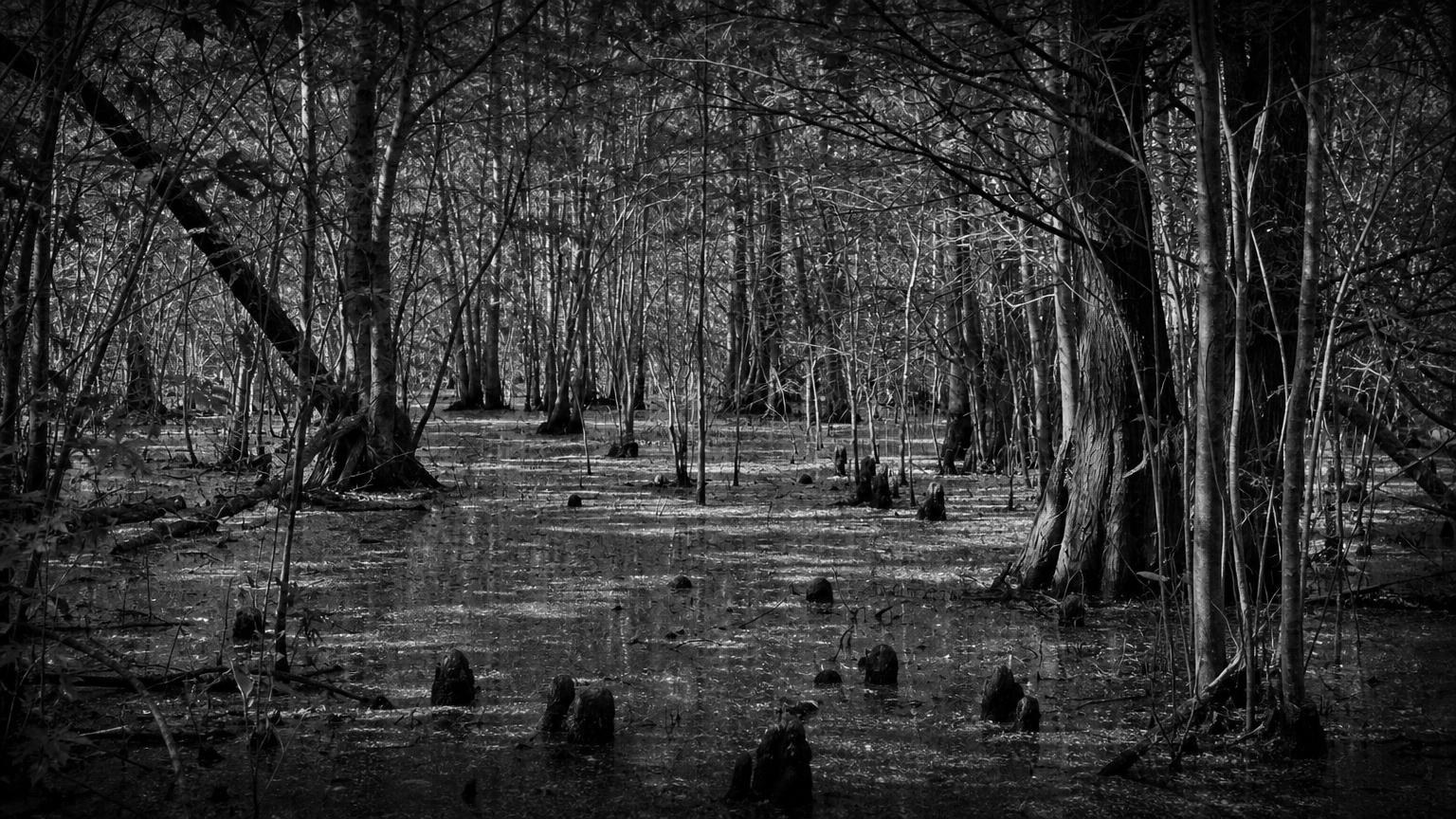
Great Dismal Swamp ghost stories surround a real wetland on the Virginia–North Carolina border. Its documented significance includes Indigenous history and communities of people who escaped slavery. Tales of wandering figures belong to folklore; they do not establish who lived or died in a particular part of the swamp.
What the Record Actually Shows About the swamp
The U.S. Fish and Wildlife Service describes the refuge's cultural history alongside its wildlife habitat. From the late seventeenth century through the Civil War, freedom seekers used the swamp as shelter. Some established maroon communities on raised ground within the wetland. The national wildlife refuge was established in 1974.
Those histories deserve attention on their own terms. Turning unnamed maroons into a collective population of ghosts erases the choices and endurance of actual people. A haunting claim cannot identify an archaeological site, a settlement or an individual burial.
Where the Ghost Stories Begin
The earlier account describes a woman searching for a lost lover, lights over the water and figures called the “Ethereal Ones.” It supplied no named witness, dated interview or archival source for those particular claims. They should be read as unverified storytelling, not eyewitness evidence.
A sighting narrative becomes more useful when it records the observer's position, lighting, weather and distance. A sound or light with an uncertain source is an observation to examine; calling it a spirit supplies an explanation that the observation alone cannot support.
What the Evidence Still Cannot Prove
The sources reviewed for this article document landscape and human history, not verified paranormal activity. That leaves room to study how the stories circulate without assigning supernatural identities to people whose lives are incompletely recorded.
Exploring the Swamp Without Turning History Into Folklore
Use the refuge's official information for current access and interpretation. Follow marked routes and posted restrictions. The setting is a protected habitat and cultural landscape, not an invitation to leave trails in pursuit of a light.
For another place where documented history and dramatic surroundings invite interpretation, explore the archive's Fort Ontario story.
How might learning about the Great Dismal Swamp’s freedom-seeking communities change the way you read its wandering-figure legends?