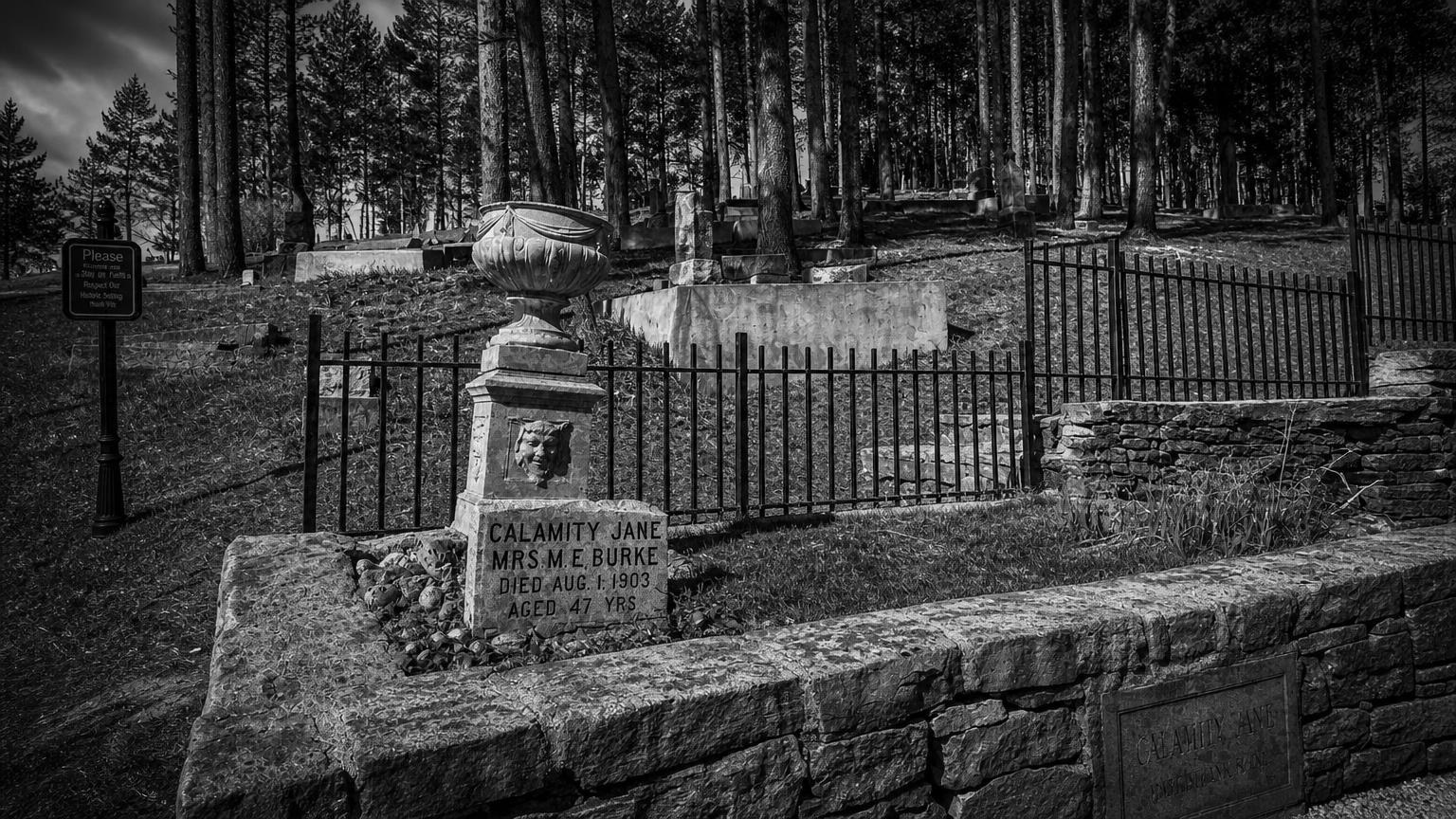
Mount Moriah Cemetery above Deadwood, South Dakota, was established in 1878. Its burials include Wild Bill Hickok and Calamity Jane, but a famous person's grave does not verify stories assigning nearby shadows or sounds to that individual.
More than the celebrity graves
The City of Deadwood describes a late-Victorian cemetery on a plateau overlooking Deadwood Gulch. Its interpretive materials address the cemetery's history and the people who shaped the city.
The city's historic walking-tour guide points to sections associated with veterans, Jewish and Chinese residents, fraternal organizations and children. This broader community history deserves attention alongside the best-known names.
A cemetery's varied memorials can reveal relationships and traditions without requiring a paranormal explanation for their symbolism.
What the Haunting Claims Are Built On
The earlier account described voices, cold spots, shadow figures and children's laughter. It did not identify dated witness statements or original recordings establishing those episodes.
An observer's proximity to Hickok's or Jane's grave does not establish the identity of a reported figure. Similarly, a photograph containing a light or mist needs its original context before interpretation.
Reading the landscape responsibly
Descriptions of intensified activity after dark were also unsupported. Atmosphere and expectation may form part of an experience, but they are not independent confirmation of its cause.
The documented history offers a way to learn about actual people beyond the recurring ghost-story names. Explore South Dakota locations or compare another cemetery's history and folklore at Sleepy Hollow.
The documented history and the later haunting claims answer different questions. Keeping them separate preserves the people and events in the record without turning an unresolved report into proof of a supernatural cause.
Whose documented life at Mount Moriah would you explore beyond the familiar names of Hickok and Calamity Jane?