
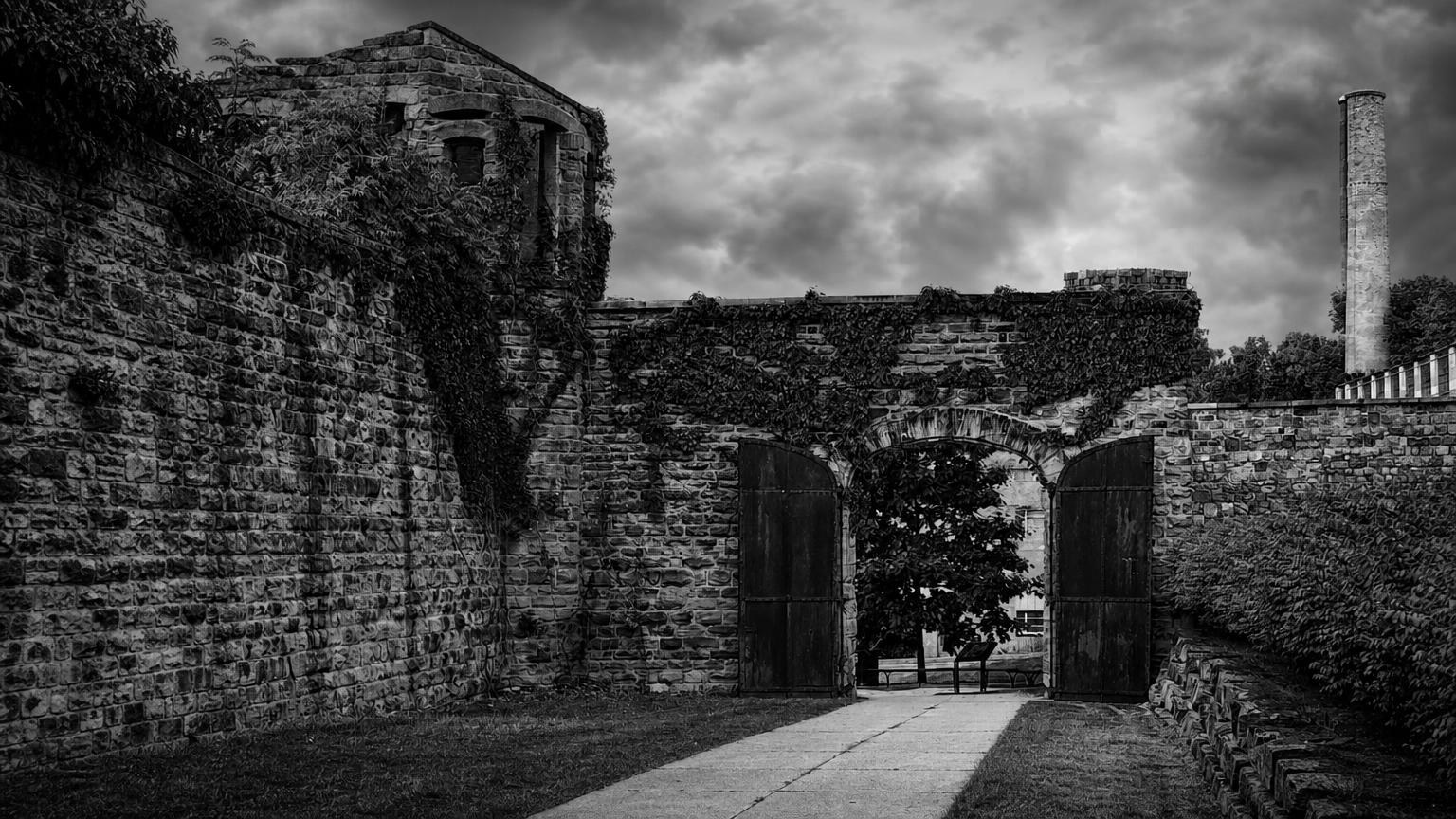
Michigan's first state prison opened in Jackson in 1839. Its role in prison labor and the city's development is documented. The earlier account's claim that an inmate named Elias Friske was executed there for murder in 1893 is unsupported and conflicts with Michigan's capital-punishment history.
The Prison That Helped Shape Jackson
The University of Michigan's Carceral State Project describes the first prison's small wooden enclosure and the role of local business interests seeking inmate labor.
That history places the institution within Jackson's industrial development. It offers a more useful foundation than an undifferentiated account of a sinister building where every reported sound is attributed to suffering.
The Execution Story That Does Not Fit Michigan History
A Michigan legislative analysis explains the state's 1846 abolition of capital punishment except for treason and its later constitutional prohibition.
The archive's story of a murder execution in 1893 supplied neither a court record nor a reliable prison source. It should not be repeated as a historical explanation for an alleged apparition.
What Remains of the Haunting Claims?
The earlier article also described cold spots, voices and shadow figures without identifying original witnesses or recordings. Those are unverified claims, not confirmation of a named spirit.
Accounts should specify which prison site, building and period they concern. Jackson's successive correctional facilities should not be treated as one unchanged location.
Explore Michigan stories or compare the importance of location and demolition history at Thomaston's former prison.
The documented history and the later haunting claims answer different questions. Keeping them separate preserves the people and events in the record without turning an unresolved report into proof of a supernatural cause.
How does the missing support for the Elias Friske execution story change which parts of Jackson’s prison lore you would investigate next?