
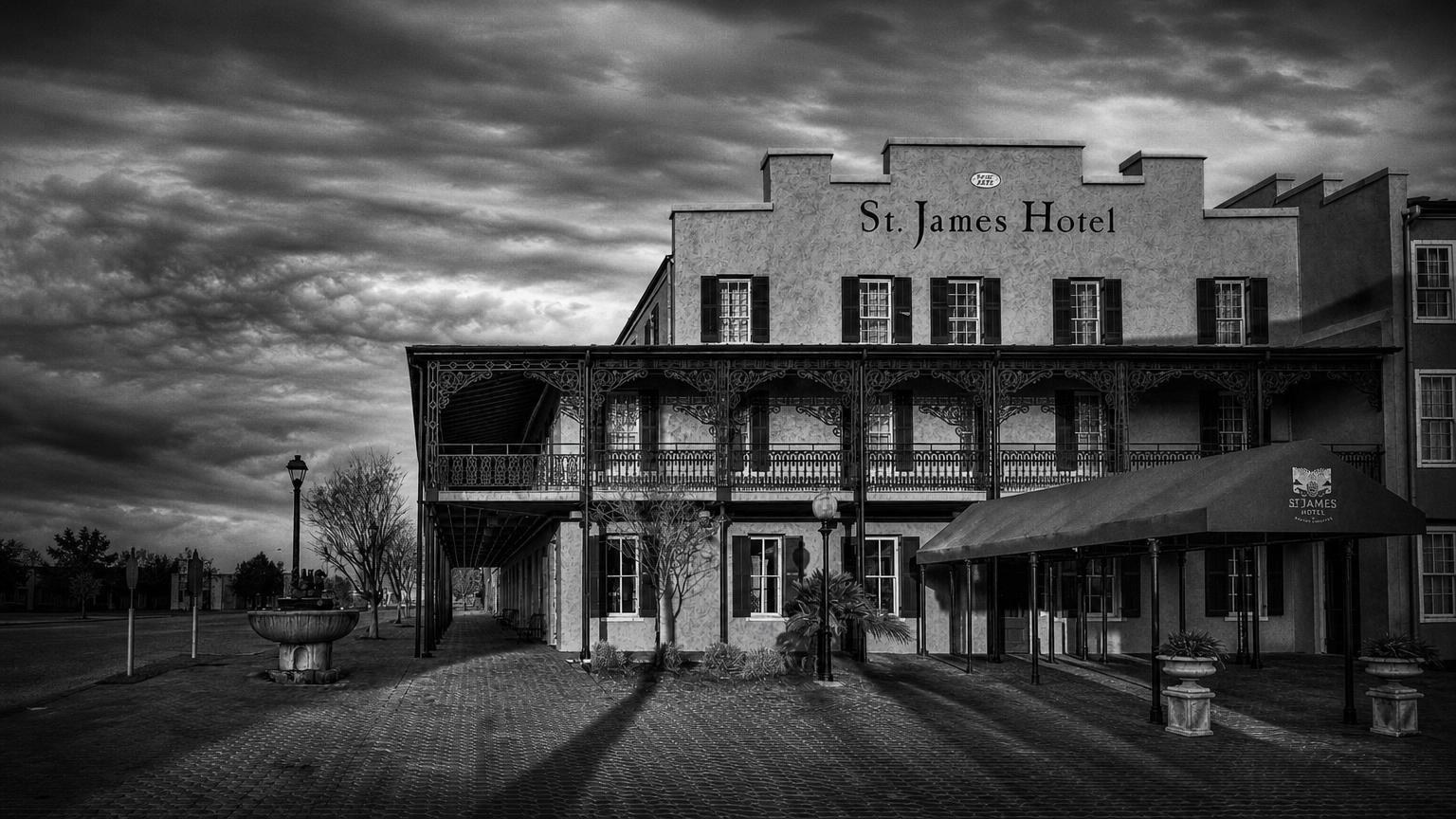
The St. James Hotel in Selma, Alabama, was built in 1837–1838 and later restored after a long period of other uses. Its connection with Benjamin Sterling Turner is documented history; stories assigning apparitions to Jesse James or a woman called Lucinda require separate evidence.
Before the Ghost Stories: A riverfront hotel and Benjamin Sterling Turner
RuralSWAlabama's historical account identifies Turner as the hotel's manager while he was enslaved, before the Civil War. After emancipation, he became a businessman and Alabama's first African American member of the U.S. House of Representatives.
This is more precise than describing him simply as a later hotel owner. His work and political life should not be reduced to background scenery for an outlaw legend.
Closure did not mean a century of abandonment
The historical account records the hotel's closure in 1892 and subsequent commercial and industrial uses. A restoration completed in 1997 returned it to hotel use.
The building therefore did not stand empty for that entire interval, as the earlier account suggested. Changes in use are part of its history and can matter when identifying the location of a reported event.
Where the ghost legend begins
Frank and Jesse James are reported to have spent time at the hotel. That tradition does not establish that a later figure seen in a corridor was Jesse James.
The earlier story also described Lucinda as a murder victim but supplied no record establishing her identity or death. Room-specific experiences, cold spots and noises remain unverified without dated testimony or original material.
Explore Alabama locations or compare another hotel's documented history and reported hauntings at the Ellis Hotel.
How might Benjamin Sterling Turner’s documented connection to the St. James shift the focus of a story usually centered on Jesse James?