
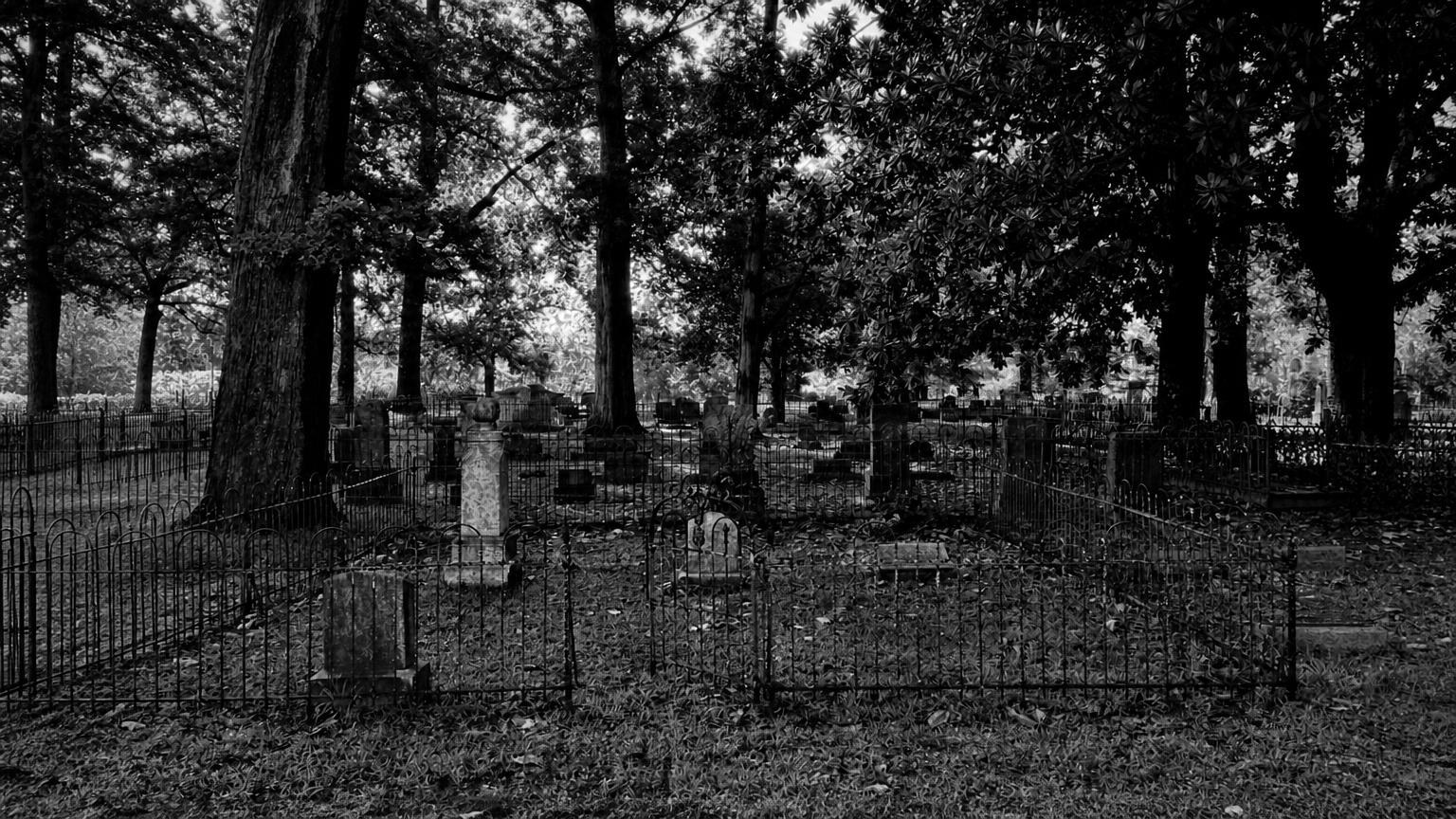
The Chapel of the Cross in Madison County, Mississippi, carries a story that is already poignant without turning every piece of it into a ghost legend. The chapel grew from the Johnstone family's history, while the cemetery became associated with the broken engagement of Helen Johnstone and Henry Grey Vick. Later folklore adds a woman in white, bells and shadow figures. The documented lives and the paranormal stories overlap in place, but they do not prove one another.
Margaret Johnstone Began the Chapel After Her Husband's Death
The parish's history records John Johnstone's death in 1848 and Margaret Johnstone's subsequent work on the chapel. That corrects an earlier version of the story that reversed the founding history.
The parish identifies architect Frank Wills and also acknowledges that enslaved people made bricks on site. Those details are essential to understanding the building. The chapel's Gothic Revival character may create an atmospheric setting today, but its history is tied to real labor, family loss and a continuing religious community.
Helen Johnstone and Henry Grey Vick Had a Real Tragedy
New Southern View's account, drawing on Jan Warner's book Shadows of a Chapel, recounts Henry Grey Vick's death in a duel before his planned 1859 wedding to Helen Johnstone.
That event is often treated as the beginning of the cemetery's ghost story, but Helen's life did not end there. The same account records her marriage to George Harris in 1862. Describing Helen as a woman who never married or spent the rest of her life frozen in grief erases documented history in order to make the haunting more romantic.
The Woman in White Is a Folkloric Identification
Stories describe a woman in white near a grave and often identify her as Helen. The image fits the broken-engagement narrative so neatly that the connection can feel obvious. But a figure in white does not come with a verified name.
Unless a witness account contains information capable of establishing identity, “Helen's ghost” is better understood as the interpretation attached to the sighting rather than a fact demonstrated by it. The distinction preserves the folklore without rewriting Helen's biography.
Bells and Shadows Need Their Own Evidence
Earlier accounts also mentioned unexplained bells and shadow figures without supplying investigation records. Those reports remain unverified. A chapel bell can be heard for many reasons, and a shadow can be observed without its cause being immediately clear.
A useful paranormal account would preserve the date, witness, precise location and circumstances of the event. If audio or imagery exists, the original file and environmental context matter far more than a later summary of what someone believed it represented.
The Cemetery's Real History Should Not Become Set Dressing
Cemetery ghost stories can unintentionally reduce real people to characters in a supernatural narrative. At the Chapel of the Cross, the documented Johnstone family history and Vick's death deserve to remain human history first. The legend can be told without claiming to know Helen's thoughts, intentions or presence after death.
That approach makes the haunting story more credible, not less. Readers can see exactly which parts come from historical sources and which belong to later tradition.
A Continuing Church, Not an Abandoned Ruin
The parish history also makes clear that the Chapel of the Cross is part of a continuing religious community, with periods of decline, reactivation and restoration. It should not be approached as an abandoned paranormal attraction simply because cemetery folklore surrounds it.
The chapel remains compelling because documented family history, architecture, faith and local legend all meet in the same place. Keeping those layers distinct allows the mystery to remain without sacrificing the people behind it.
Explore more Mississippi locations or compare the evidence questions surrounding Sleepy Hollow Cemetery.
What would you want a Chapel of the Cross retelling to preserve about Helen Johnstone and Henry Grey Vick beyond the woman-in-white legend?