The Betsy Ross House sits in Philadelphia's Old City with two kinds of uncertainty attached to it. Historians continue to examine what can be established about Ross and the first American flag, while ghost stories add a second layer of questions about footsteps, temperature changes and a woman in colonial clothing. Neither question becomes clearer by borrowing evidence from the other.
First, Make Sure We Are Talking About the Right House
Historic Philadelphia places the attraction in Philadelphia's Historic District. This is the Betsy Ross House discussed here, not an unrelated building elsewhere in Pennsylvania.
Location may seem obvious, but haunted-place lists are especially vulnerable to copied names, mismatched photographs and stories that drift from one property to another. Establishing the correct address and institution is the first step before either the history or the paranormal claims can be evaluated.
The House Interprets a Real Historical Debate
The museum uses documents, artifacts and costumed interpretation to examine Ross's working life and the continuing question of her role in making the first Stars and Stripes. That uncertainty is part of the historical story rather than a flaw in it.
Visit Philadelphia describes the residence as dating to about 1740 and emphasizes Ross's work as a seamstress and businesswoman. That corrected an unsupported 1797 construction date that appeared in an earlier account.
Ross and John Claypoole Are Commemorated Here
Historic Philadelphia identifies graves in the courtyard for Betsy Ross and her third husband, John Claypoole. Their presence in the site's historical interpretation is documented. It does not mean that a later figure seen in the house can automatically be identified as Ross or Claypoole.
That distinction is easy to lose in a famous historic home. When visitors already know a name, an ambiguous sighting can quickly become “Betsy Ross's ghost” even if the witness never had information capable of identifying the figure.
Footsteps, a Rocking Chair and a Woman in Colonial Dress
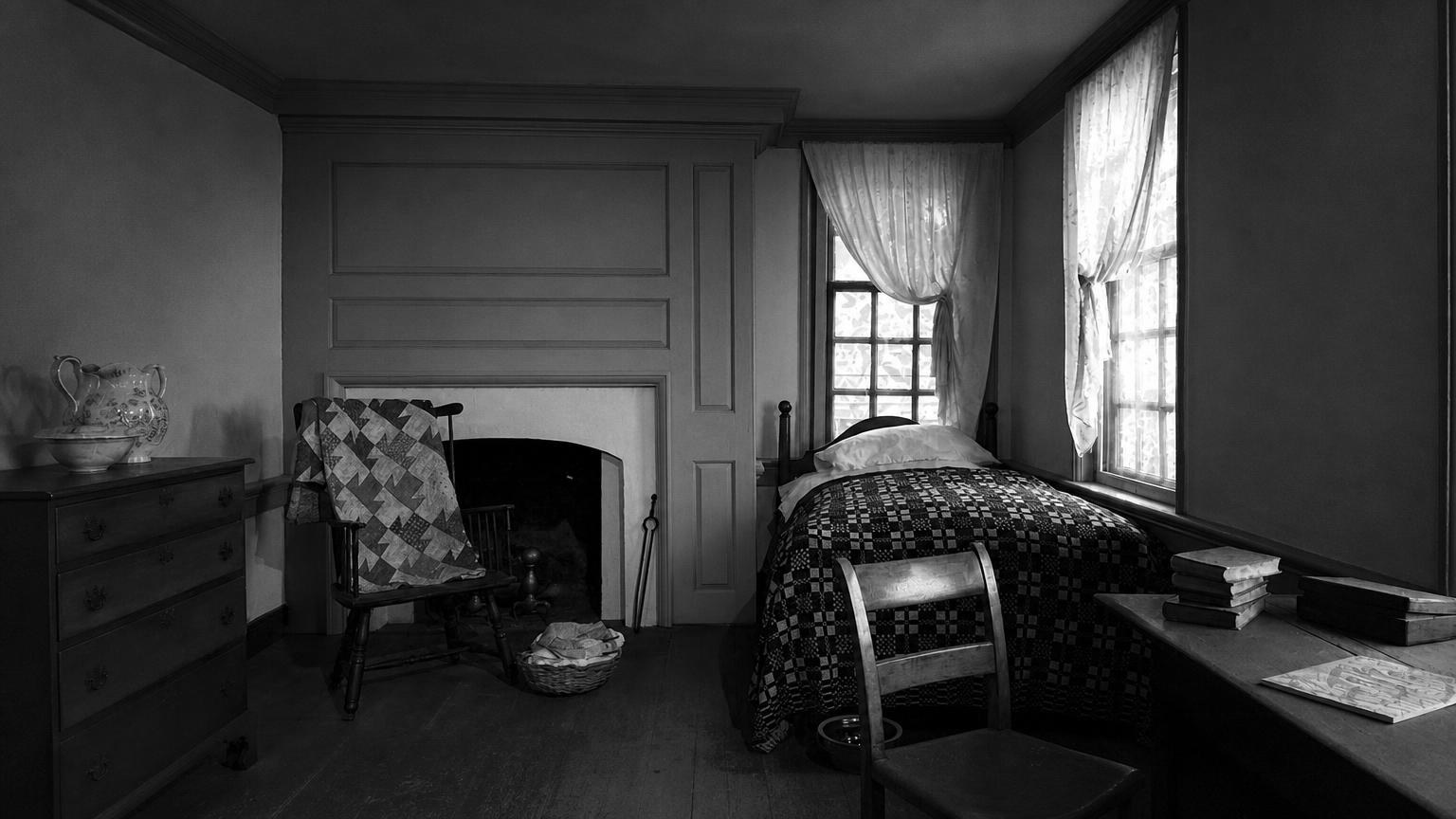
The archive story describes footsteps, unusual temperature changes, movement involving a rocking chair and a woman in colonial clothing. It does not provide named witnesses, dated accounts or original recordings for those specific incidents.
Those stories can be preserved as part of the property's paranormal reputation without being promoted into verified events. A report of a woman in period clothing, for example, does not establish identity, era or cause. Historic attractions also use interpretation and period presentation, making circumstances especially important to any sighting claim.
Secret Meetings and Hidden Messages Need Their Own Sources
Earlier retellings also connected the property with secret meetings and messages supposedly hidden in quilts. The museum material reviewed for this article does not establish those claims. They should not be used as historical explanations for alleged apparitions simply because they sound plausible within a Revolutionary-era setting.
A compelling mystery is still a mystery when the source is missing. Adding unsupported secret history only makes it harder to tell which parts of the story can actually be traced.
Three Questions That Should Stay Separate
The Betsy Ross House raises at least three different questions: what historians can establish about Ross and the first flag, how the museum interprets her life and work, and what caused the unusual experiences later visitors have described. Evidence for one question does not automatically answer the others.
A careful paranormal report would preserve the witness's exact observation, the room and conditions, possible ordinary explanations and any original media before offering an interpretation. A careful historical report does the same kind of work with documents and provenance.
That is why the house remains interesting without needing a verdict. It is a genuine historic site with an openly interpreted historical debate and a set of ghost stories whose evidentiary basis remains limited.
Continue through Pennsylvania's archive or compare historical documentation and legend at Harpers Ferry.
Which of the Betsy Ross House’s separate questions—flag history, museum interpretation or reported encounters—would you pursue first, and why?