
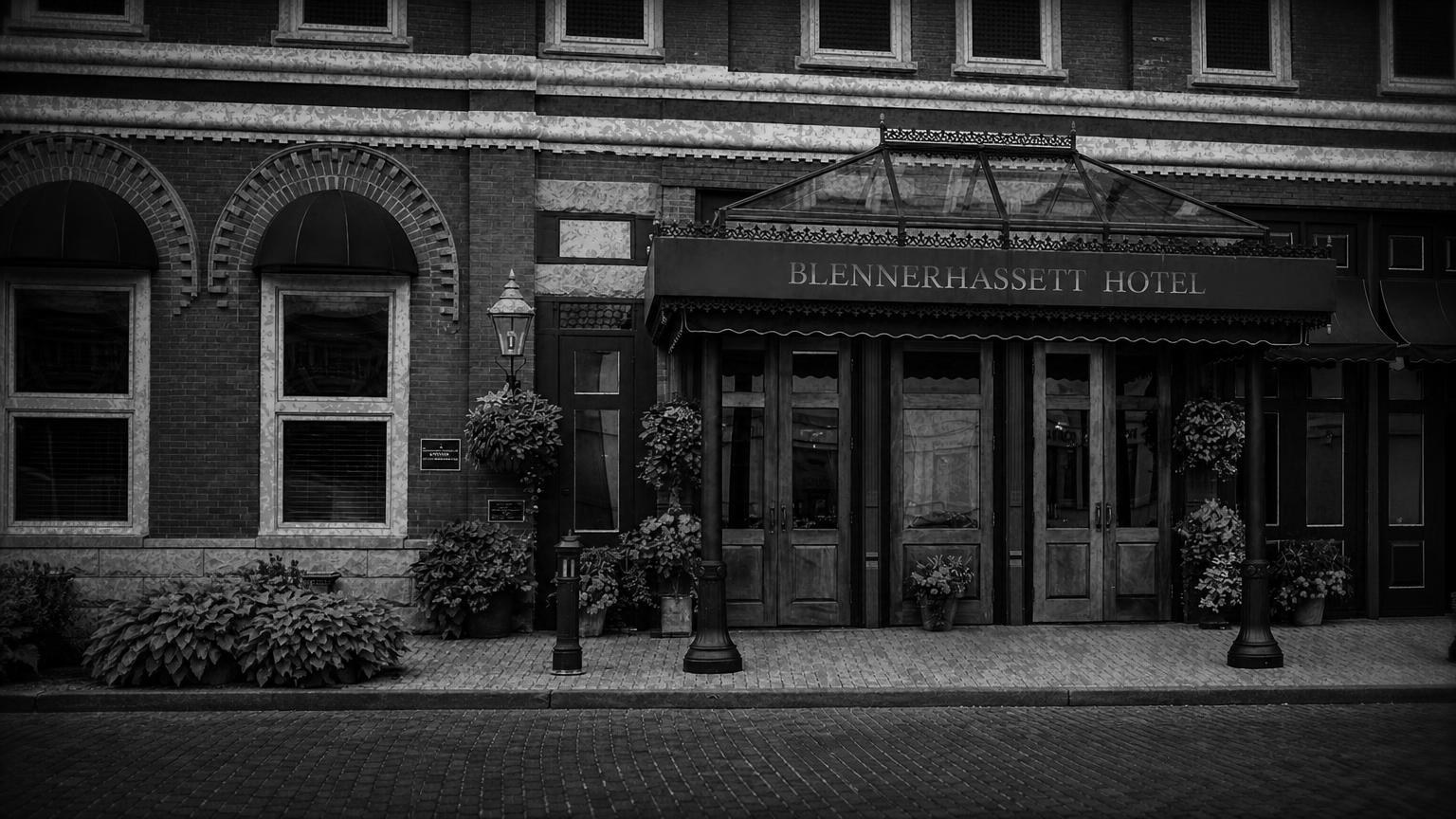
The Blennerhassett Hotel opened in Parkersburg, West Virginia, in 1889, when oil and gas money was reshaping the region. That Gilded Age history gives the hotel a strong identity before any ghost story enters the picture. Later retellings add a male figure, a woman in white, footsteps and guest-room disturbances. The hotel history can be documented. The identities assigned to those alleged spirits cannot be established from that history alone.
Six Years of Construction, Then Opening Day
The hotel's historical account identifies Colonel William Nelson Chancellor as the developer and gives May 6, 1889, as opening day after six years of construction. Electric and gas lighting, steam heating and elevators were among the early amenities.
Those details help place the hotel in a particular moment. It was designed as a substantial modern property for a prosperous city, not as a decaying building that only later acquired importance because of ghost stories.
Why It Is Called the Blennerhassett
Manager George C. Campbell chose the Blennerhassett name in honor of Harmon Blennerhassett, who was associated with a nearby island. The name can cause confusion in paranormal retellings because readers may assume that Harmon built, owned or lived in the hotel. He did not.
That is exactly the kind of historical shortcut that can later produce a ghost identification without evidence. A familiar name connected with the region is not the same thing as a documented connection to a reported figure inside the building.
A Hotel, a Bank and a Busy Downtown Building
Chancellor's bank also occupied space inside the hotel. The building therefore combined lodging with commercial activity, which is useful context for understanding how many people passed through it and how many different stories could accumulate over time.
A long-lived hotel naturally produces layers of memory. Guests, staff and businesses all leave traces in the documentary record. Paranormal claims need to be kept separate from that record unless an experience can actually be tied to a source.
The Man, the Woman in White and the Room Stories
Retellings describe a male figure, a woman in white, footsteps and disturbances in guest rooms. Earlier accounts assigned some experiences to particular rooms without providing dated testimony or an original investigation record.
A room number makes a story vivid, but it does not tell us who witnessed the event, what happened or what ordinary causes were considered. The same applies to naming Chancellor as a possible spirit. A documented historical person should not become the identity of an apparition simply because the name fits the setting.
Historic Hotels Can Make Small Things Feel Significant
Older hotels have long hallways, changing mechanical systems, doors, elevators and spaces where sound can travel in ways a visitor may not expect. Guests also arrive knowing the building is historic. That context can make footsteps, a knock or a fleeting figure feel especially meaningful.
None of those possibilities automatically explains a particular report. They are reasons to preserve the original circumstances before deciding what an experience means. A witness statement, contemporaneous note or original recording would be much more useful than a later summary stripped of context.
What the Evidence Can and Cannot Tell Us
The hotel's opening date, developer, early amenities and banking connection can be checked against a named historical source. A ghost report requires a different source. The two may exist side by side, but one cannot be used as proof of the other.
That is what keeps the Blennerhassett interesting: a richly documented hotel with a genuine place in Parkersburg's history and a paranormal reputation whose individual claims remain open questions. For current accommodations and access, the hotel itself remains the appropriate source.
Browse West Virginia stories or compare history and folklore at Harpers Ferry.
What might the Blennerhassett’s banking connection and early amenities add to a story usually introduced through guest-room disturbances?