
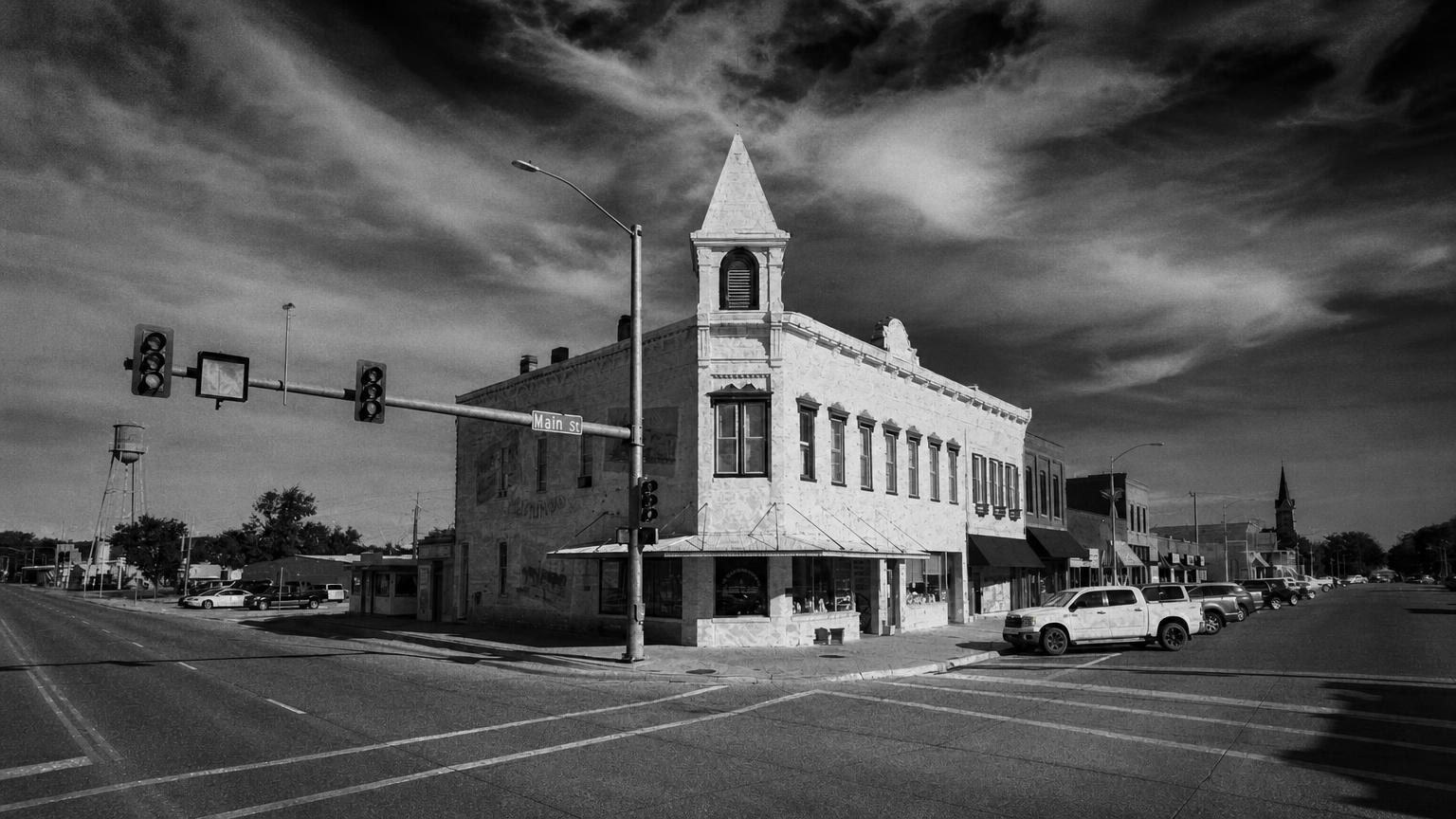
The Bank of Ellinwood has the kind of documented history that can easily turn into a ghost story. The bank operated from part of the Wolf Hotel building in Ellinwood, Kansas, and its 1908 collapse involved a real financial scandal and a real human tragedy. Modern stories about footsteps, figures and a vault door belong to the property's paranormal reputation, but the historical record and the haunting claims are not the same thing.
The Bank Was Part of the Wolf Hotel
The Wolf Hotel's National Register nomination places the Bank of Ellinwood in the west portion of the hotel's main floor. The nomination describes an Italianate commercial building dating to about 1894, with later additions.
That identification is important because a story about an old bank is not useful unless the building itself is clear. Ellinwood has a broader commercial history, and paranormal retellings can become detached from the actual space if the location is treated vaguely. Here, the historic nomination gives the bank a specific setting inside the Wolf Hotel complex.
January 1908: The Crisis That Became Part of the Legend
According to the National Register nomination, a state examiner closed the bank on January 20, 1908. Cashier W. Leo Bockemohle was arrested the next day and died by suicide four days after the closure. His brother, bank president Ed Bockemohle, was later convicted of falsifying bank statements.
The same account says Peoples State Bank opened in the former offices in March 1908. Those events belong to the documented banking history of the building. They are serious enough without using them as automatic proof of a haunting.
When a Documented Tragedy Meets a Ghost Story
Modern retellings sometimes identify a bank manager or employee as a presence in the old bank area. Earlier accounts also described voices, cold areas and a vault door that seemed to move or slam. The material reviewed for this story does not provide a named witness, dated investigation report or original recording for those incidents.
A historical name can make an anonymous apparition story feel more convincing, but the connection still has to be demonstrated. Knowing that someone worked at the bank does not establish that a later figure, sound or sensation was that person.
The Vault Is a Setting, Not an Explanation
A former bank vault naturally becomes a focal point in a paranormal story. Heavy doors, unusual acoustics and the knowledge of what the space once held can make an experience there especially memorable. But a report about a vault door needs the same details as any other claim: who observed it, whether the door was secured, what its condition was and whether anyone else was present.
Without those details, the event remains an anecdote rather than evidence of a supernatural cause. That does not make the story worthless. It simply keeps the report separate from the explanation.
History and Haunting Need Different Evidence
The Bank of Ellinwood is a good example of why paranormal research works best when the history is established first. The bank's location, closure and later reuse can be traced through historical documentation. Footsteps, figures and voices require witness-level documentation of their own.
When those two evidence streams are blended together, a real tragedy can be turned into a convenient ghost biography. Keeping them separate protects the history while leaving room for genuinely unexplained reports to be examined on their own terms.
What Would Strengthen the Case?
A stronger paranormal account would identify the precise room, date and circumstances of each incident and preserve any original audio, video or photographs. Repeated observations from independent witnesses would be more useful than a legend whose details change with retelling.
For now, the Wolf Hotel gives the Bank of Ellinwood a documented home, and the 1908 banking crisis gives it a powerful historical story. The paranormal claims remain part of the building's folklore rather than a settled explanation of what happens there.
For related regional reading, explore Kansas stories and the distinction between folklore and documentation at the Bel Aire water tower.
What would you want to see in an original account of Ellinwood’s moving vault door before connecting it to the 1908 banking crisis?