
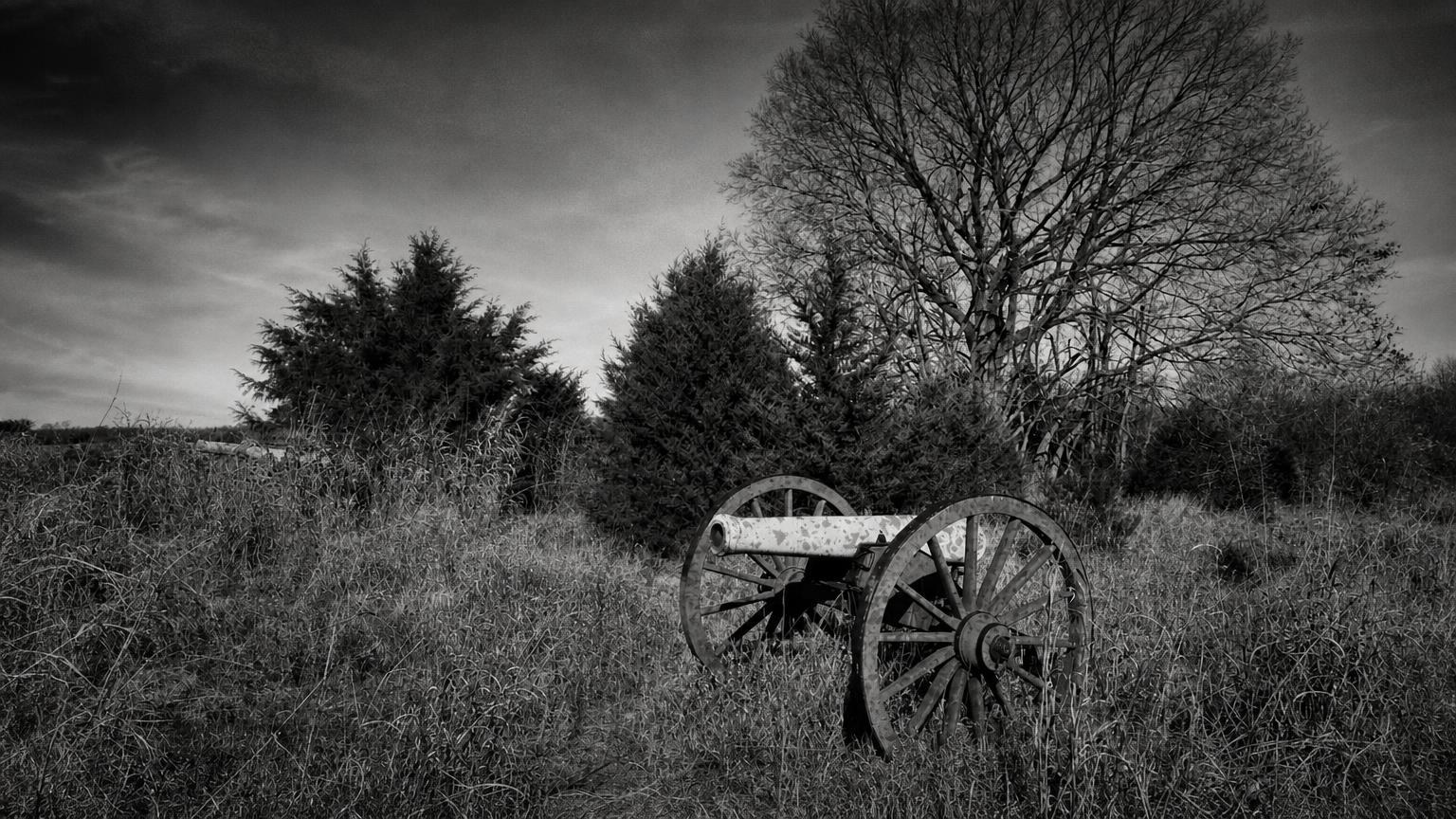
Antietam is a place where the documented history is already difficult to absorb. On September 17, 1862, fighting near Sharpsburg, Maryland, produced roughly 23,000 soldiers killed, wounded or missing in about twelve hours. That reality has made the preserved battlefield a place of remembrance — and, over time, a setting for stories about soldiers, voices and distant gunfire that witnesses interpret as something more.
Twelve Hours That Changed the Course of the War
The National Park Service records approximately 23,000 casualties during the battle. The word casualties matters: it includes soldiers killed, wounded or missing and should not be repeated as though all 23,000 died.
Antietam also had consequences beyond the battlefield. The Confederate Army of Northern Virginia's first invasion of the North ended, and five days later Abraham Lincoln issued the preliminary Emancipation Proclamation. The National Park Service explains that relationship in its account of freedom at Antietam.
Those facts make Antietam historically significant without requiring a paranormal layer at all. They also explain why visitors arrive knowing they are entering a landscape associated with enormous violence and loss.
Bloody Lane and Burnside's Bridge Carry Their Own Weight
Ghost stories often gather around the battlefield's best-known landmarks, including Bloody Lane and Burnside's Bridge. Retellings describe marching sounds, distant voices, figures in period clothing and sudden waves of sadness.
The names and landscape already carry historical meaning, which can shape how an experience is interpreted. A visitor who hears something unusual near a famous battle position is not hearing it in a neutral setting. The history is part of the experience before anyone decides what caused the sound.
Where the Soldiers and Gunfire Stories Begin
Earlier accounts repeated several paranormal experiences without providing traceable witness names, dates or original evidence. Those accounts can be described as reports or battlefield folklore, but they should not be promoted into verified encounters.
The same rule applies to photographs. Calling an indistinct shape a soldier does not establish that the image contains an apparition. The original file, exposure information, lighting conditions, camera position and sequence of images would all matter before a photograph could be evaluated seriously.
Grief, Memory and an Unexplained Experience Can Coexist
A battlefield can produce powerful emotional reactions for reasons that are entirely understandable. Visitors know what happened there. They may be standing near places where people were killed or wounded, reading names and accounts while looking across much of the same terrain. A sudden feeling of sadness in that setting does not need to be dismissed, but it also does not identify a supernatural cause.
The most useful approach separates observation from interpretation: what did a person hear, see or feel; what did they believe it meant; and what independent information supports that explanation? Keeping those layers apart preserves both the witness account and the history.
The Battlefield Is Evidence of History, Not Evidence of a Haunting
The reality of suffering at Antietam cannot be used as automatic proof that spirits remain there. Tragedy tells us why a location matters. It does not tell us the cause of every later noise, image or sensation.
That distinction may sound cautious, but it makes the paranormal question stronger rather than weaker. If an account survives after ordinary explanations and historical assumptions have been separated out, there is something specific left to investigate.
Visit the Battlefield as a Battlefield First
For historical study, preservation information and current visitor guidance, the National Park Service should be the starting point. Ghost-story retellings are not permission to enter closed areas or explore outside established access rules.
Antietam's documented story deserves to remain at the center: a preserved Civil War landscape with a profound national history and a collection of paranormal reports whose causes remain unresolved.
Explore Maryland's archive or continue with Harpers Ferry's history and ghost stories.
How might a witness’s location and the activity around Antietam help you interpret a report of distant gunfire?