
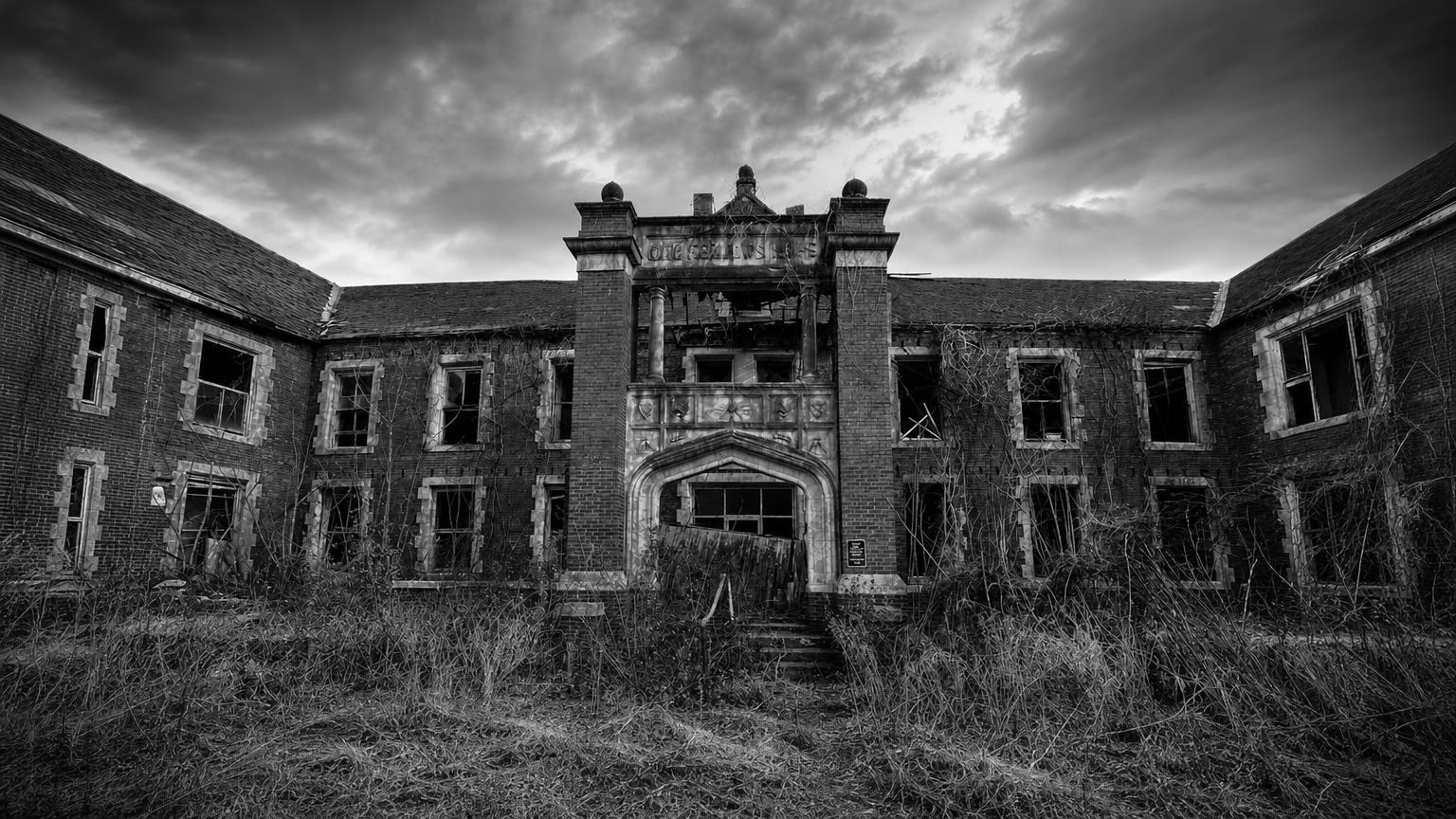
Belvoir Winery in Liberty, Missouri, occupies part of a former Odd Fellows institutional campus, a place whose real history is complex enough to resist the simple labels often used in haunted-location lists. The campus served members, older residents and children through different buildings and programs. Its paranormal reputation adds stories of voices, figures and unexplained touch, but those claims need to stay connected to the correct spaces and the evidence actually available.
This Was a Campus, Not a Single Haunted Building
Belvoir's historical account traces the property from an earlier hotel site through the Odd Fellows' acquisition in 1900 and later rebuilding. The campus developed multiple functions over time rather than operating as one institution with one purpose.
The history identifies architect William B. Ittner and William F. Knell with the administration building, Edmond J. Eckel with the 1907–08 old people's building, and a hospital constructed in 1923. Those distinctions matter because a paranormal report tied to one structure should not automatically be relocated to another.
The People Who Lived Here Deserve More Than a Ghost Label
The Odd Fellows campus was part of a system of fraternal support. Older residents, members and children were not simply characters in a future haunted attraction; they were people living within a real social institution. Keeping that history visible prevents the paranormal narrative from flattening the site into an “orphanage” or “hospital” where tragedy is assumed rather than documented.
That also changes how alleged apparitions should be described. A figure in an old building cannot be identified as a former resident merely because residents once lived there. Historical possibility is not identification.
Children's Laughter, a Woman in White and Moving Shadows
The earlier account describes children's laughter, a woman in white, shadow figures and sensations of being touched. It does not supply named witnesses, original recordings or dates for those specific incidents.
Those descriptions remain paranormal claims rather than verified events. The fact that a property hosts or attracts paranormal investigation demonstrates interest in the stories, not that an investigation has established a supernatural cause.
The Building Matters to the Evidence
On a multi-building campus, location is not a minor detail. Investigators would need to identify the exact structure, floor and room involved in any reported sound or figure. Activity in an occupied public area has a different set of possible explanations from activity in a closed space. Sound can also travel between rooms or buildings in ways a short retelling may not preserve.
That is why an isolated clip of a voice or knock cannot carry the entire case. The recording needs context: who was present, what other activity was occurring, where the equipment was placed and whether the sound was heard live as well as captured.
History Can Explain the Setting Without Explaining the Experience
Belvoir's documented institutional past gives the paranormal stories a setting, but it does not tell us what caused a particular witness experience. The strongest account keeps both layers intact. The buildings have a traceable history. People report unusual events. The connection between the two remains a question rather than a conclusion.
That approach also protects against one of the easiest mistakes in haunted-history writing: taking a real person from the historical record and using that person's life as the explanation for an anonymous modern apparition.
Visiting Belvoir Today
Anyone interested in the property should use Belvoir's official information for current public areas, tours and events. Access to the winery does not imply access to every structure on the former campus, and paranormal curiosity does not override property rules.
Belvoir remains compelling because the real campus history and the reported experiences can be explored side by side without forcing one to prove the other.
For another Missouri location where documented institutional history needs careful interpretation, continue to Jefferson Barracks.
How might identifying the particular Odd Fellows building and its residents change a reported encounter associated broadly with Belvoir?