
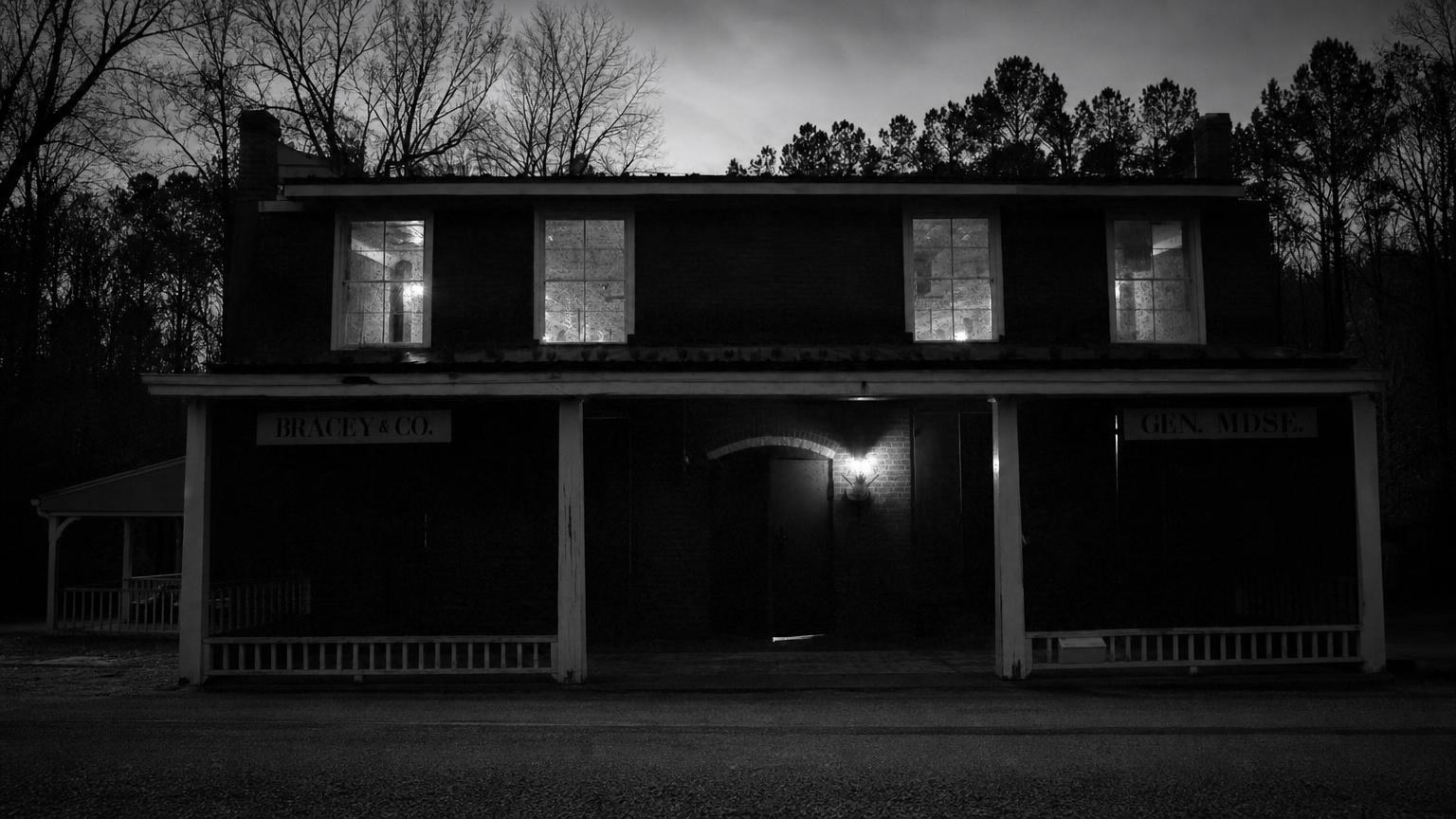
Bracey General Store belongs to the railroad-era story of Bracey, Virginia, when the depot, nearby stores and River Road commerce shaped everyday community life. It also has a paranormal reputation, including reports of figures entering the building and claims involving security-camera footage. The history gives the store a clear setting. The alleged sightings remain reports whose cause has not been established.
The General Store Grew With a Railroad Community
A local history by Verna Palmer Bracey and Susan Bracey Sheppard describes several stores around River Road and the depot. Waller Bracey's general store sold provisions and household goods and included a post office.
That combination makes the store easier to picture as part of ordinary community life rather than simply as a “haunted old building.” People came for goods, mail and business connected to a settlement shaped in part by the railroad. The documented setting is already richer than an invented tragedy would be.
The Business and the Surviving Building Are Not the Same Timeline
The local history distinguishes an earlier store building that burned from the later brick replacement. That matters because a business can be older than the structure standing today. A ghost story that treats every event in the business's past as though it happened inside the current building can quietly move history from one location to another.
The Bracey History Project documents the general store alongside the train depot and other local landmarks. It is another reminder that Bracey contained several commercial buildings, not one catch-all historic property.
Where the Ghost Reports Actually Come From
Virginia's tourism office recounts local claims about figures entering the store and a property owner's claim to have captured sightings on security cameras. Importantly, that account does not identify a specific historical tragedy as the explanation.
That is narrower than later versions that assign a ghost to a named cashier or employee. The earlier account included a cashier figure without supporting witness details or a historical record capable of identifying that person. The safer account is simply that figures have been reported.
A Security Camera Can Record Something Without Explaining It
A camera claim sounds stronger than an oral ghost story because there may be an image or video behind it. But even an original recording would need context before it could establish what happened. Camera placement, lighting, reflections, compression, motion blur and activity outside the frame can all affect what appears on screen.
Without access to the original file and its circumstances, a retelling of “the camera caught a figure” is still a secondhand claim. It may be worth investigating, but it is not equivalent to independently examining the footage.
The Store Does Not Need an Invented Death
One of the easiest ways a haunted-history article goes wrong is by deciding that every apparition needs a tragic biography. Bracey's documented history does not require one. The store's connection to local commerce and the railroad community is real, and the paranormal stories can stand as unresolved reports without attaching them to an unsupported death.
That protects both sides of the story. Historians are not asked to accept a ghost legend as evidence, and witnesses are not dismissed simply because the identity assigned later cannot be supported.
What Would Make the Case Stronger?
The most useful next step would be the original security footage or a first-person account from the property owner, with date, camera location and surrounding circumstances preserved. Independent reports describing the same kind of event in the same area would add context.
Until then, Bracey General Store remains a railroad-era commercial landmark with a local haunting tradition and a camera story that deserves careful handling rather than certainty.
Explore Virginia locations or compare the commercial history behind Ellinwood's Wolf Hotel story.
If Bracey’s original security footage became available, what would you examine around the reported figure’s arrival and departure?