
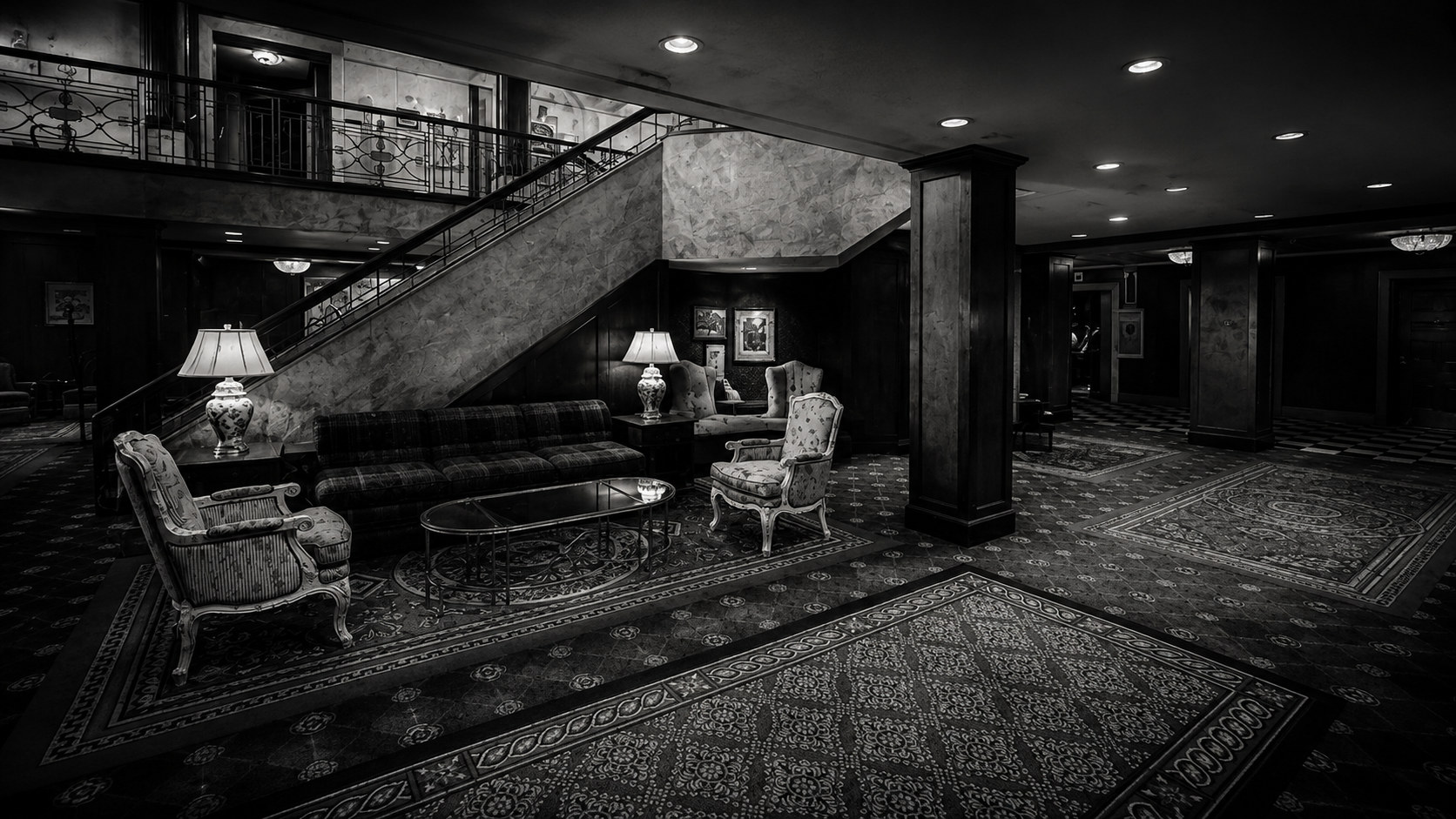
The Providence Biltmore’s haunted legends concern the hotel at 11 Dorrance Street in Providence, Rhode Island. Its architectural and social history is documented; its supernatural reputation is a different category of story. It should not be confused with other hotels or estates sharing the Biltmore name.
Before the Ghost Stories: A Hotel Built as a Civic Landmark
The Library of Congress architectural record identifies Warren and Wetmore as the architects and describes the hotel’s opening in June 1922. It records the building’s importance to Providence’s business and social life.
The Society of Architectural Historians describes the Chamber of Commerce’s fundraising role and the building’s distinctive massing and ornament. Its account also notes alterations to the lobby. A historic interior image should therefore not be treated as a guarantee of the room’s current furnishings or arrangement.
Another significant chapter appears in the University of Virginia’s Green Book research. That project documents the hotel’s listing for Black travelers from 1947 through 1955. This is a specific, researchable part of the hotel’s social history, quite separate from sensational stories about its supposed origins.
Where the haunted reputation needs caution
Stories of unexplained noises, apparitions and unsettling experiences belong to the hotel’s paranormal reputation. They should not be presented as established events without an original account or supporting documentation. Claims involving secret rituals, named victims or elaborate crimes need more than repetition in ghost-tour copy.
The historical sources linked here establish architectural and social context. They do not substantiate those more dramatic supernatural narratives. The absence of support in these sources does not settle every possible claim, but it does mean this article cannot responsibly repeat one as fact.
Reading a hotel ghost story
Look for a date, a specific location and a traceable witness. Distinguish what was observed from what was inferred, and compare the room description with the hotel’s documented changes. An occupied hotel offers many possible sources of sound and movement that a brief anecdote may omit.
Providence’s Biltmore deserves attention as a civic landmark whether or not a particular ghost story can be verified. Explore more places and reported encounters through our Rhode Island coverage.
Which changes in the Providence Biltmore’s rooms or use would you want to trace when comparing two accounts of the same reported encounter?