Aloha Tower was built to help people navigate Honolulu Harbor, but over time it also became something more symbolic: a landmark associated with arrival in Hawaiʻi. That documented maritime role is easy to establish. The tower's ghost stories — footsteps, whispers, cold spots and fleeting figures sometimes linked to wartime deaths — belong to a different kind of record and need to be treated that way.
The Tower That Greeted Honolulu by Sea
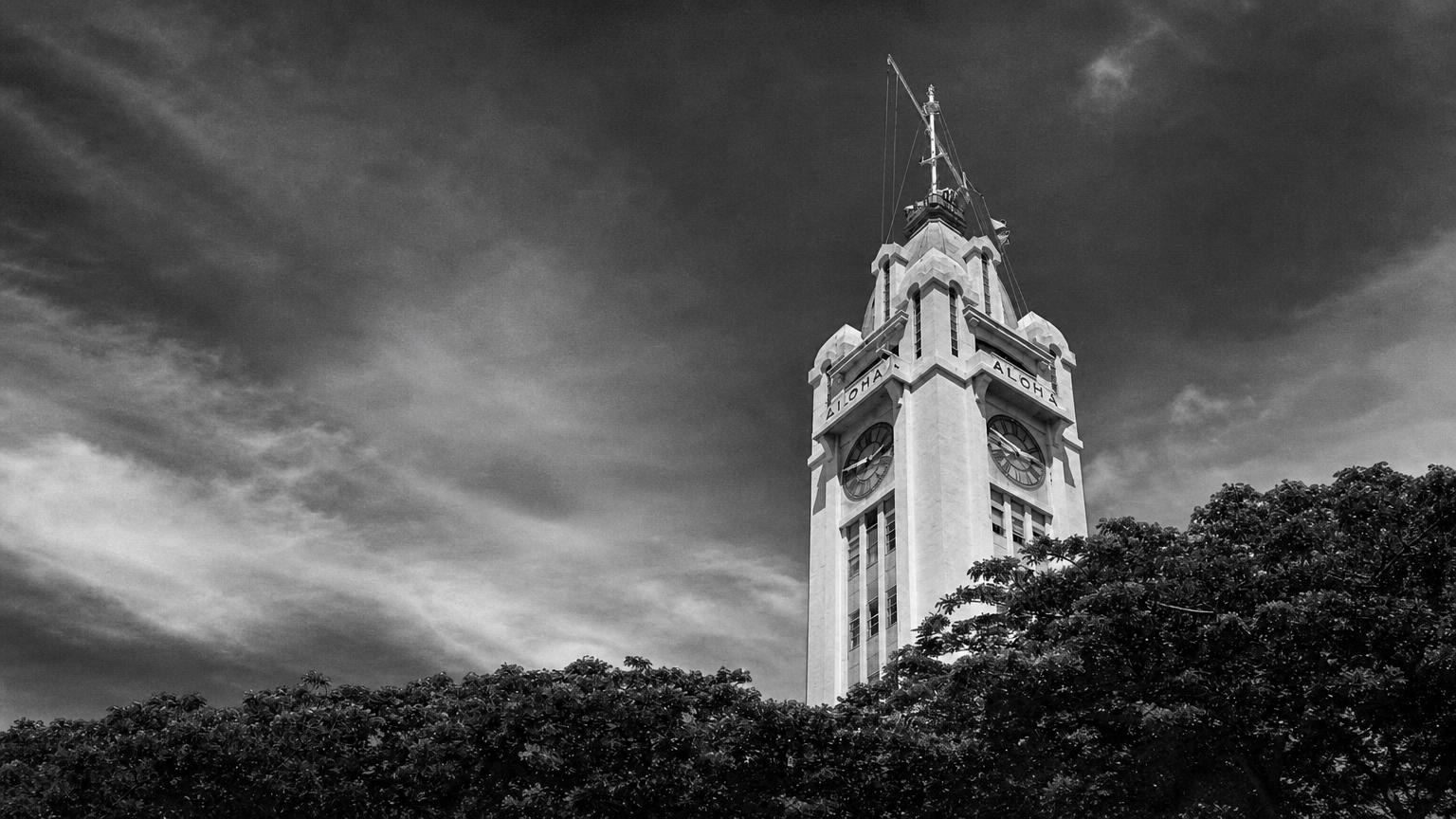
The tower's history page describes a 184-foot structure completed in 1926 with an observatory and lookout station for harbor pilots. Its lighthouse and large clock made the tower a practical part of harbor operations and a recognizable sight for people approaching Oʻahu by ship.
The enormous ALOHA lettering helped turn a working structure into a visual welcome. Long before air travel became the dominant way visitors arrived, the harbor was an arrival point, and the tower stood at the center of that experience.
From Harbor Tool to Symbol of Arrival
The Historic Hawaiʻi Foundation connects Aloha Tower to maritime transportation and tourism from its construction through the rise of commercial air travel. Sailors, harbor workers, travelers and the people who met incoming ships all belong to that history.
That matters because haunted-location stories often flatten a place into a spooky backdrop. Aloha Tower was not built as a mysterious ruin. It was a working piece of harbor infrastructure that became a civic landmark, and its real history gives the setting more depth than an invented tragedy ever could.
Where the Ghost Story Enters
The earlier account describes footsteps, whispers, sudden cold areas and fleeting figures in or around the tower. Some versions connect those experiences with unnamed wartime casualties. No dated witness statements or original recordings were supplied for those particular connections.
That means there are two claims to keep separate. One is that people have circulated stories about unusual experiences at Aloha Tower. The other is that those experiences represent specific dead people from a particular historical event. The first can exist as folklore or witness reporting. The second needs evidence identifying the person and establishing the event.
A Shadow Does Not Come With a Biography
A fleeting silhouette can be memorable, especially in an older tower where stairs, windows and changing harbor light create unusual sight lines. But location and appearance alone cannot tell us that a figure was a soldier, sailor, harbor worker or anyone else.
The same applies to a voice or a set of footsteps. A witness may sincerely experience something they cannot explain while the cause remains unresolved. Responsible reporting preserves the observation without adding an identity the evidence does not support.
Wartime History and Paranormal Claims Are Not the Same Record
A structure can have a wartime association without every later strange experience being connected to a wartime death. Before a haunting story names a casualty, a useful account should establish who died, where the death occurred and why the witness experience is being linked to that person.
Without that bridge, the story may still be interesting — but it remains a story about an unexplained experience rather than a documented encounter with a known spirit.
What a Stronger Account Would Need
For a reported sighting or sound, useful documentation would include the observer's location, time, lighting, other people present, what happened immediately before and after the event, and any original photograph or recording. Those details do not guarantee a paranormal answer. They make the event possible to evaluate.
Aloha Tower does not need an invented ghost biography to be compelling. Its maritime history is substantial, and the unanswered reports can remain unanswered until better evidence exists.
Explore more Hawaiʻi stories or compare the different maritime setting of Eldred Rock Lighthouse.
What sounds and movements around Honolulu Harbor would you want to consider alongside an account of whispers at Aloha Tower?