
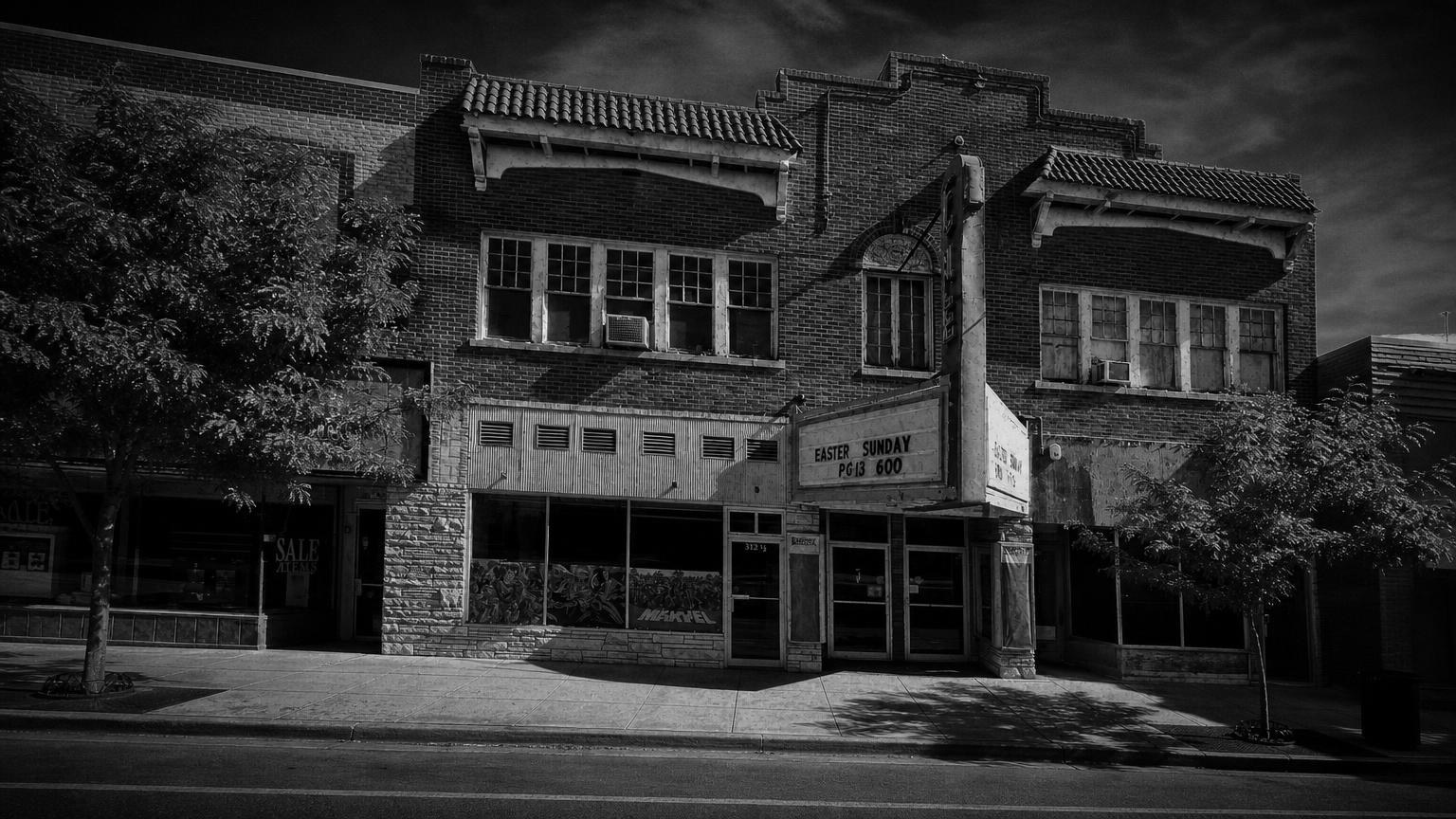
The Acme Theatre has been part of Riverton, Wyoming, for generations, which gives its ghost stories something many haunted-location legends never get: a real, traceable place in local history. The theater business predates the present building, while the Main Street auditorium itself opened in 1920. The stories that followed — a shadow in the balcony, footsteps in an otherwise empty theater and speculation about who might still be there — are harder to pin down.
Before the Ghost Stories, There Was an Acme
The theater's story begins before the building visitors recognize today. County 10's local-history account describes an earlier Acme enterprise and Belle Mote's role in developing the theater business.
That distinction matters. When a business survives across locations or eras, it is easy for later retellings to blend every anecdote into one building. The Acme's early cinema history is real, but not every story associated with the name necessarily happened inside the current auditorium.
July 14, 1920: The Acme Gets Its Main Street Home
County 10 dates the opening of the present Main Street venue to July 14, 1920. The Riverton Museum's historic walking-tour material identifies the Acme at 312 East Main Street and places it within Riverton's commercial and cultural history.
For a small-town theater, that kind of longevity can make the building feel less like a business and more like a container for generations of local memory. People gathered there for entertainment, watched the technology of movies change and returned to the same address year after year. None of that proves a haunting, but it helps explain why an unexplained sound in a familiar old theater can become a story that sticks.
The Shadow in the Balcony
A 2021 County 10 report describes alleged sightings of a shadowy figure in the balcony. Some versions speculate that the figure could be connected to a vaudeville-era performer.
That is where the record becomes thinner. A figure seen near a balcony does not identify a person, occupation or era. Without a dated witness account, a photograph, a recording or some other original documentation, the most responsible description is also the most interesting one: people have reported a figure there, but no one has established who — or what — it was.
Footsteps, Popcorn and an Empty Auditorium
The Riverton Museum also preserves a story about sounds resembling footsteps crunching popcorn when the theater was otherwise empty. It is a wonderfully specific detail, and specificity is part of what makes a ghost story memorable. It is not, by itself, proof of a paranormal cause.
Old theaters contain balconies, stairways, mechanical systems and large spaces where sound can travel strangely. A useful investigation would start with the sound itself — where it seemed to begin, who heard it, what else was operating in the building and whether it could be repeated — before attaching an identity to it.
The Stories We Cannot Tie to the Record
An earlier account included a tragic projectionist death and a sorrowful woman said to be connected to the theater. No traceable records were supplied for either biography. Those details should remain outside the Acme's documented history unless reliable evidence turns up.
That does not erase the balcony figure or the reported footsteps. It simply keeps the mystery where the evidence actually leaves it. Riverton has a century-old theater, local reports of unusual experiences and a set of stories that deserve to be told without inventing a victim to make them more dramatic.
Compare Constantine Theater's history or continue through Wyoming's archive.
What could a firsthand description of the Acme’s balcony figure establish without supplying an invented projectionist’s biography?