
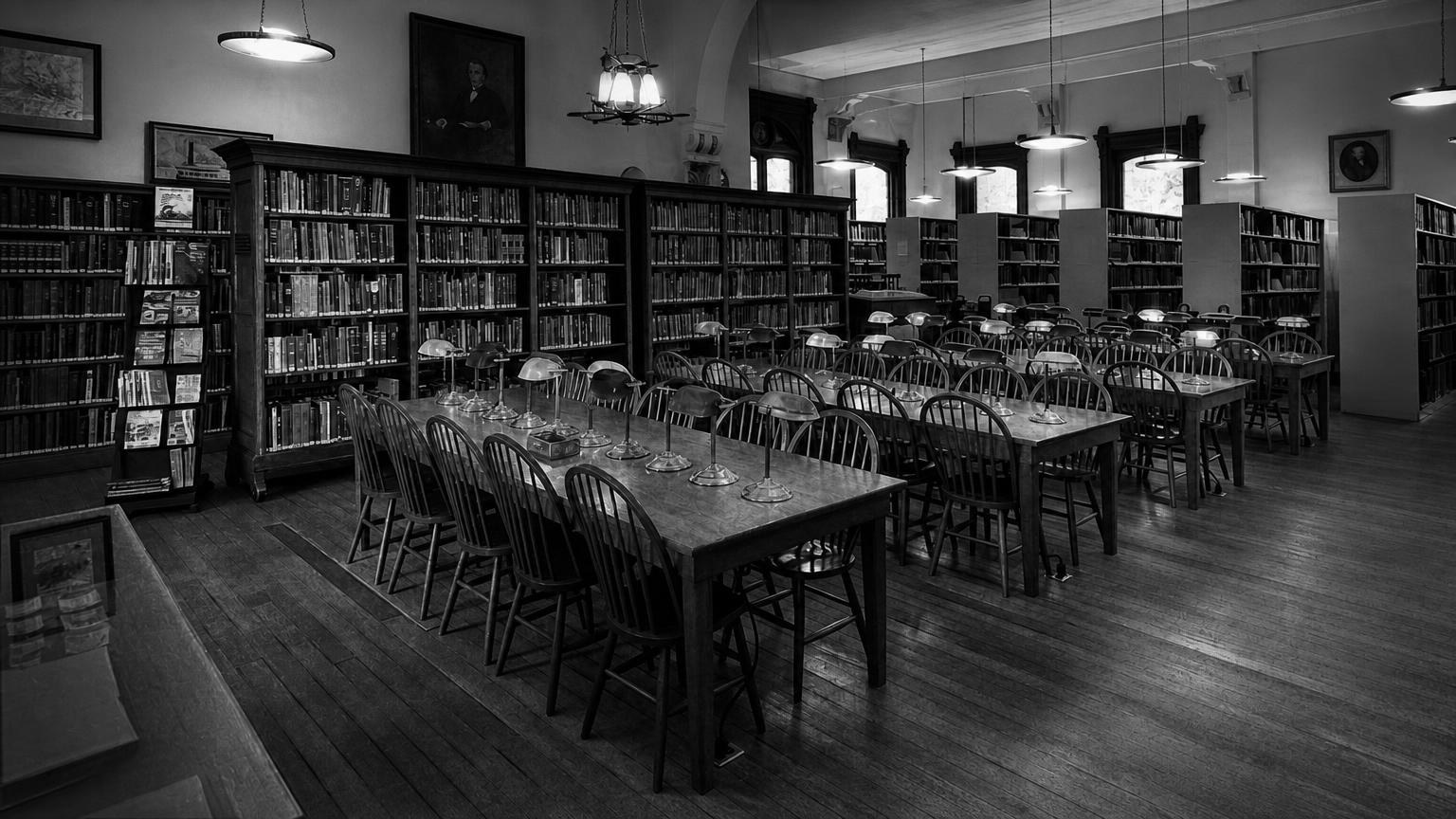
A woman in a long dress and veil, encountered while a custodian tended a boiler: that is the scene at the beginning of Willard Public Library's Grey Lady tradition. The library traces the report to winter 1937. The image has a place in Evansville folklore; the woman's identity and any supernatural explanation remain unresolved.
Before the Veiled Figure
Willard Library opened in 1885 through philanthropist Willard Carpenter's legacy, according to its history handout. Its library and archival work forms the historical setting for the legend that developed later.
That distinction gives the building a life beyond the haunting narrative. The institution preserves and presents a ghost tradition, but its material also has to be read according to purpose. A library's account of a local legend documents how that legend is told; it does not independently confirm the cause of every reported event.
The Boiler Encounter of 1937
The library's Ghost FAQs place the first encounter in winter 1937, while a custodian was tending the boiler. The reported figure wore a long dress and veil.
This is the founding encounter as the library recounts it. Its setting and clothing make the story memorable, but those details do not establish who the woman was or whether an apparition appeared. Keeping the attribution attached allows readers to appreciate the account without turning a reported experience into a settled event.
Footsteps, Fragrances and Flickering Lights
The same library page describes later experiences involving footsteps, fragrances, moved furniture and flickering lights. These reports broaden the tradition beyond the original sighting into sounds, smells and changes in the surroundings.
They remain attributed experiences rather than measurements that isolate one cause. Nor does grouping them beneath the Grey Lady name demonstrate that they share an explanation. The legend supplies a connection; the reports, as presented here, do not establish that connection independently.
A Familiar Surname, an Unsettled Identity
Louise Carpenter, the founder's daughter, is one proposed identity. The library also lists former librarians among the possibilities. It does not identify the Grey Lady definitively.
The historical existence of a person and the identification of an alleged apparition are different questions. A familiar surname, portrait or perceived resemblance may help a story take shape, but cannot by itself connect a reported figure to that person. The uncertainty should stay visible wherever a proposed name appears.
What a GhostCam Frame Leaves Out
The library shares its tradition through cameras and collected reports. These give readers another way to encounter the story, though an unusual-looking screenshot has narrower evidentiary value than its caption may suggest.
A single frame usually lacks motion, lighting context and surrounding activity. It can preserve an image without explaining it. Readers should separate what the recording directly shows from the interpretation attached to it, leaving room for ordinary explanations of images or equipment problems unless those possibilities have been examined.
The Veil Remains Part of the Story
Willard's Grey Lady is compelling partly because the earliest account gives her a recognizable outline without a reliable identity. Preserving that unresolved space is more faithful to the sources than choosing a name to complete the narrative.
For another Indiana setting with a different history, visit the account of French Lick Springs Hotel or browse Indiana stories. At Willard, the veil belongs to the reported encounter; the certainty sometimes placed behind it does not.
What do you find most compelling about Willard’s earliest Grey Lady account when the figure behind the veil remains unnamed?