
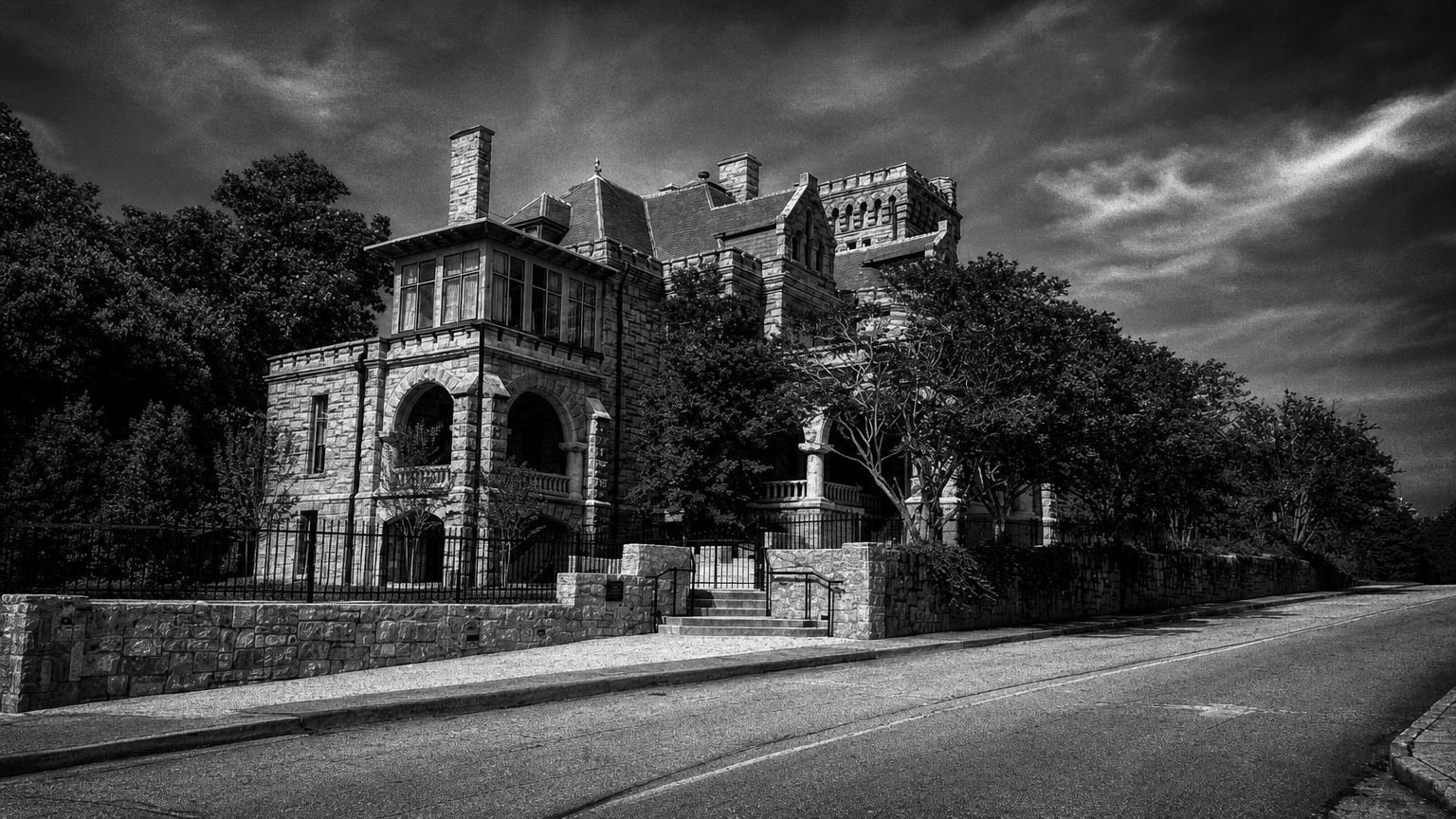
Rhodes Hall is a historic Atlanta residence known as the castle on Peachtree Street. Its architecture and ownership history can be documented; stories about figures on its staircase and unexplained footsteps require a different level of attribution.
A House Built for Amos and Amanda Rhodes
The Georgia Trust dates the house's construction to 1902–1904. Amos Rhodes, founder of Rhodes Furniture, commissioned the residence for his family.
The Trust's history also corrects a misleading timeline in the earlier account on this site. The Rhodes children deeded the building to the State of Georgia in 1929, rather than after the 1950s. The Georgia Trust moved into Rhodes Hall in 1983.
The Architecture Behind the Castle Nickname
The property's history and tour information identifies architect Willis F. Denny and describes the influence of the family's travels in the German Rhineland. The elaborate interior includes a carved mahogany staircase and painted-glass windows.
These are real features of an unusually ambitious residence. Its resemblance to a castle does not make it a medieval building, and a dramatic appearance should not substitute for an accurate account of its age and purpose.
Separating Family History From Ghost Stories
Haunting retellings describe footsteps, whispers and a woman near the stairs. The earlier account offered no named witness or original investigation record establishing those incidents. It also speculated about the identities of supposed apparitions.
Such speculation should not be presented as something known about the Rhodes family. A documented person, a reported sighting and a proposed identification are three different claims. Establishing the first does not establish the other two.
What Would Make an Investigation Useful?
A useful report would identify when and where an observation occurred, preserve any original recording and explain how investigators considered ordinary sounds or visual ambiguities. Without those details, the haunting remains part of the building's reputation rather than a demonstrated conclusion.
For the property's historical interpretation and current access arrangements, consult Rhodes Hall directly. Browse more Georgia locations or compare the documented architecture and reported activity at Pittock Mansion.
If an original recording of Rhodes Hall’s reported footsteps became available, what would you listen for before deciding how to interpret it?